 English
 Français

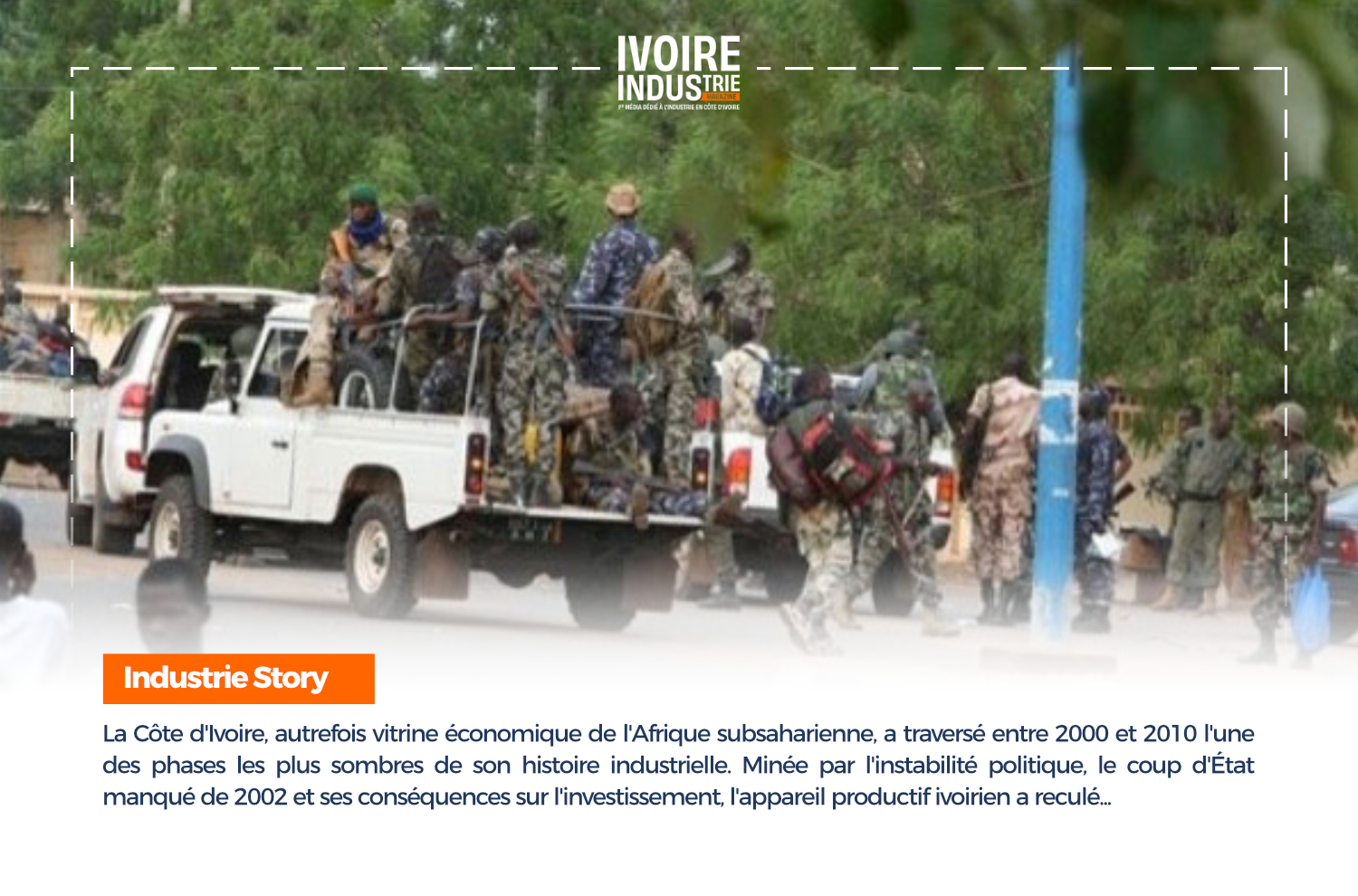
Au seuil du nouveau millénaire, la Côte d'Ivoire héritait d'un tissu industriel relativement développé pour la région. Abidjan et Bouaké constituaient les deux pôles névralgiques d'un secteur secondaire qui avait prospéré durant les décennies précédentes, adossé à une agro-industrie puissante et à des industries de transformation diversifiées. L'agro-industrie représentait alors environ 50% du secteur industriel, portée par les filières cacao, café, palmier à huile et coton. La Côte d'Ivoire était le premier producteur mondial de cacao et entendait capitaliser sur cette rente agricole pour alimenter une transformation locale à plus forte valeur ajoutée. Mais dès 2000, les signaux d'alarme s'allumaient. Le taux de croissance du PIB était négatif cette année-là, avant de remonter très légèrement à +0,1% en 2001. L'instabilité politique ambiante, née des tensions autour de l'ivoirité et des transitions gouvernementales chaotiques, fragilisait le climat des affaires et dissuadait les investisseurs étrangers. Le pays entrait dans une longue période de turbulences dont il ne sortirait véritablement qu'une décennie plus tard.
2002 : le coup de grâce pour l'industrie
Le 19 septembre 2002, une tentative de coup d'État se transforme en rébellion armée et scinde le pays en deux. Le Nord, sous contrôle des Forces Nouvelles, et le Sud, gouverné par Abidjan. Cette fracture territoriale allait avoir des conséquences dévastatrices sur l'appareil industriel national. Bouaké, deuxième ville économique du pays et pôle industriel majeur, cessa pratiquement de fonctionner. Des usines furent pillées, d'autres contraintes à la fermeture faute d'approvisionnement en matières premières et de sécurité pour leurs employés. Le secteur textile en fut l'illustration la plus criante. L'usine Robert Gonfreville, fleuron de l'industrie cotonnière ivoirienne et leader sous-régional, vit ses effectifs fondre de manière dramatique. Avant la crise, elle employait 2 000 salariés travaillant à plein temps et produisait 10 tonnes de coton par jour. Après 2002, l'usine ne tournait plus qu'à 40% de sa capacité. À l'échelle du secteur textile tout entier, environ 80% des entreprises disparurent, entraînant la perte de près de 10 000 emplois. Le grand Nord, zone de production cotonnière par excellence, était assiégé par les forces rebelles, coupant les usines de leur source d'approvisionnement.
Une croissance en trompe-l'œil et des indicateurs préoccupants
Malgré la reprise partielle des activités à partir de 2004, avec un taux de croissance de +1,6%, l'économie ivoirienne peinait à retrouver une dynamique industrielle soutenue. Sur l'ensemble de la décennie 2000-2010, le taux de croissance moyen du PIB réel ne dépassa pas 1,3%, un chiffre dérisoire pour un pays qui affichait des ambitions d'émergence. Les investissements, bien qu'en légère progression (de 207 milliards de FCFA en 2000 à 335 milliards en 2009), restaient insuffisants pour relancer une industrie à bout de souffle. Le secteur énergétique illustrait parfaitement les limites structurelles de cette période. Les exportations d'électricité, qui atteignaient 700 gigawattheures (GWh) en 2002, chutèrent à 32 millions de kilowattheures en 2009, faute d'investissements dans la maintenance et les nouvelles capacités de production. En début 2010, le pays connut ses premiers grands délestages tournants, obligeant le gouvernement à louer, à grands frais, des groupes électrogènes alimentés au diesel. Ces pannes d'électricité contribuèrent directement à la chute estimée du PIB à 3% en 2010, contre 3,8% l'année précédente. Pour une industrie déjà fragilisée, cette pénurie énergétique représentait un obstacle supplémentaire insurmontable.
L'agro-industrie, seule bouée de sauvetage
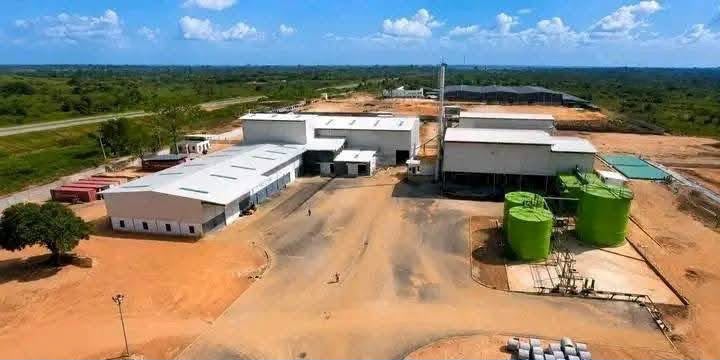
Dans ce tableau sombre, l'agro-industrie constitua le principal facteur de résilience. La filière cacao, colonne vertébrale de l'économie ivoirienne, a maintenu des niveaux de production élevés malgré les soubresauts politiques. La capacité de broyage de cacao passa de 133 000 tonnes en 2008-2009 à environ 260 000 tonnes en 2010-2011, signe que la transformation locale progressait, timidement mais réellement. Des acteurs internationaux comme Cargill, Olam ou encore Cémoi ont continué d'opérer sur le territoire ivoirien, maintenant une activité de transformation primaire à Abidjan, épargnée par les combats. La filière palmier à huile connut également une relative stabilité, maintenant un rythme d'investissement correct durant les années 2000. Ces filières agro-industrielles, portées par la demande mondiale, ont joué le rôle d'amortisseur économique, tout en contribuant au non effondrement total d'un secteur secondaire par ailleurs exsangue. Elles représentaient 75% de l'industrie manufacturière nationale, confirmant la mono-dépendance du modèle industriel ivoirien à l'égard de la transformation des matières premières agricoles.
Recettes fiscales et résistance budgétaire
Sur le plan macroéconomique, le gouvernement de Laurent Gbagbo s'attacha à préserver les finances publiques. Les recettes fiscales ont progressé de manière significative, passant de 1 035 milliards de FCFA en 2000 à 1 795 milliards en 2009, soit une hausse de 73%. Le PIB nominal, quant à lui, passa de 7 630 milliards de FCFA en 2000 à 10 486 milliards en 2008, puis 10 925 milliards en 2009. Ces chiffres témoignent d'une certaine résistance économique, mais ils masquent la réalité d'un appareil productif profondément dégradé, incapable de générer une croissance inclusive et structurelle. La fin de la décennie fut marquée par la crise post-électorale de 2010-2011, qui porta l'estocade finale à ce qui restait du dynamisme industriel. La Société Ivoirienne de Raffinage (SIR), incapable d'acheter du pétrole brut dans ce contexte de sanctions internationales, suspendit toutes ses activités début 2011. Le système bancaire vacilla, plusieurs grandes banques fermant temporairement leurs agences. La récession atteignit -6,6% en 2011, achevant la fermeture d’une parenthèse noire.
En somme, cette période restera dans l'histoire économique de la Côte d'Ivoire comme une période de rendez-vous manqués. Le pays disposait des atouts nécessaires (ressources naturelles abondantes, tissu agro-industriel solide, position géographique stratégique en Afrique de l'Ouest) pour amorcer une véritable montée en gamme industrielle. Cependant l'instabilité politico-militaire a agi comme un repoussoir systématique pour les investissements, un destructeur d'emplois et un paralysant de l'initiative entrepreneuriale.