 English
 Français


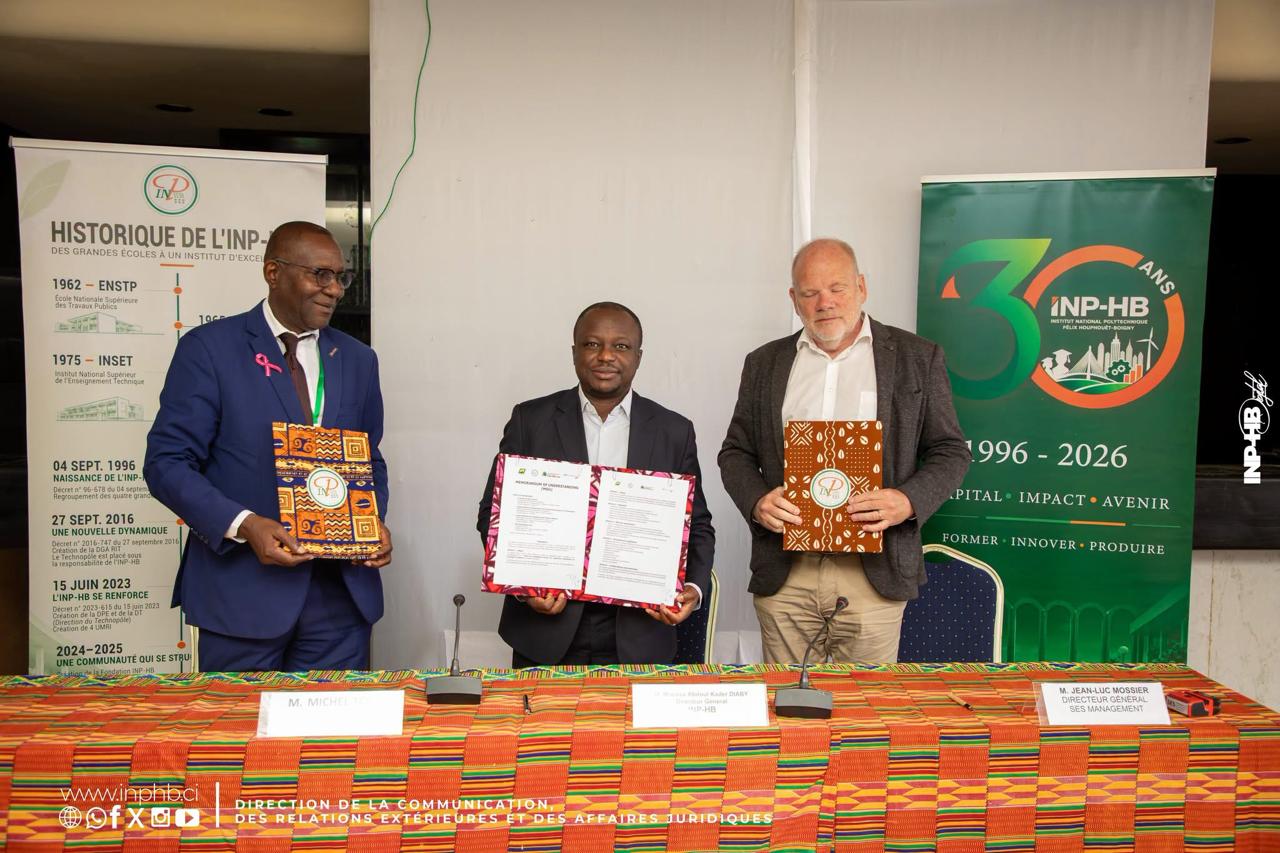
C'est une victoire africaine qui résonne bien au-delà des frontières de la Tanzanie et de la Côte d'Ivoire. En juillet 2024, l'Agence spatiale japonaise (JAXA) et le Bureau des Nations Unies pour les affaires de l'espace extra-atmosphérique (UNOOSA) ont annoncé les lauréats du 8e tour du programme KiboCUBE. Parmi les sélectionnés, une équipe conjointe formée de l'Institut de technologie de Dar es Salaam (DIT) en Tanzanie et de l'Institut national polytechnique Félix Houphouët-Boigny (INP-HB) en Côte d'Ivoire.
Un CubeSat aux missions bien définies
Le nanosatellite baptisé TanSat-1 est un CubeSat de format 1U, aux dimensions compactes de 10 cm x 10 cm x 11,35 cm, pour un poids maximal de 1,3 kg. Malgré sa petite taille, ses ambitions sont grandes. Il est conçu pour collecter des données via l'Internet des objets (IoT), relayer des informations et transférer des images depuis l'orbite. Plus concrètement, TanSat-1 suivra des balises GPS installées dans des réserves fauniques et recueillera des données environnementales grâce à des capteurs spécialisés, contribuant ainsi à la conservation de la biodiversité et à la lutte contre le changement climatique.
Une coopération Sud-Sud pionnière
Le déploiement se fera depuis le module expérimental japonais « Kibo » à bord de la Station spatiale internationale (ISS), dans le cadre du programme de coopération ONU/Japon pour le déploiement de CubeSats. Cette collaboration entre deux pays africains marque la première fois que la Tanzanie et la Côte d'Ivoire déploieront un satellite dans l'espace. Pour l'INP-HB, école d'ingénieurs basée à Yamoussoukro, c'est la consécration d'une stratégie spatiale nationale qui s'intensifie, notamment avec un récent partenariat avec l'Université de Montpellier pour anciens spécialistes ivoiriens.
TanSat-1 illustre une dynamique continentale croissante. Du Sénégal, avec son nanosatellite Gaindesat, à l'Afrique du Sud, en passant désormais par la Tanzanie et la Côte d'Ivoire, le continent s'impose progressivement comme un acteur émergent de la conquête spatiale. Pour ces ingénieurs africains, l'espace n'est plus une destination lointaine, c’est un outil concret de développement.