

23 result(s) for “PIB”
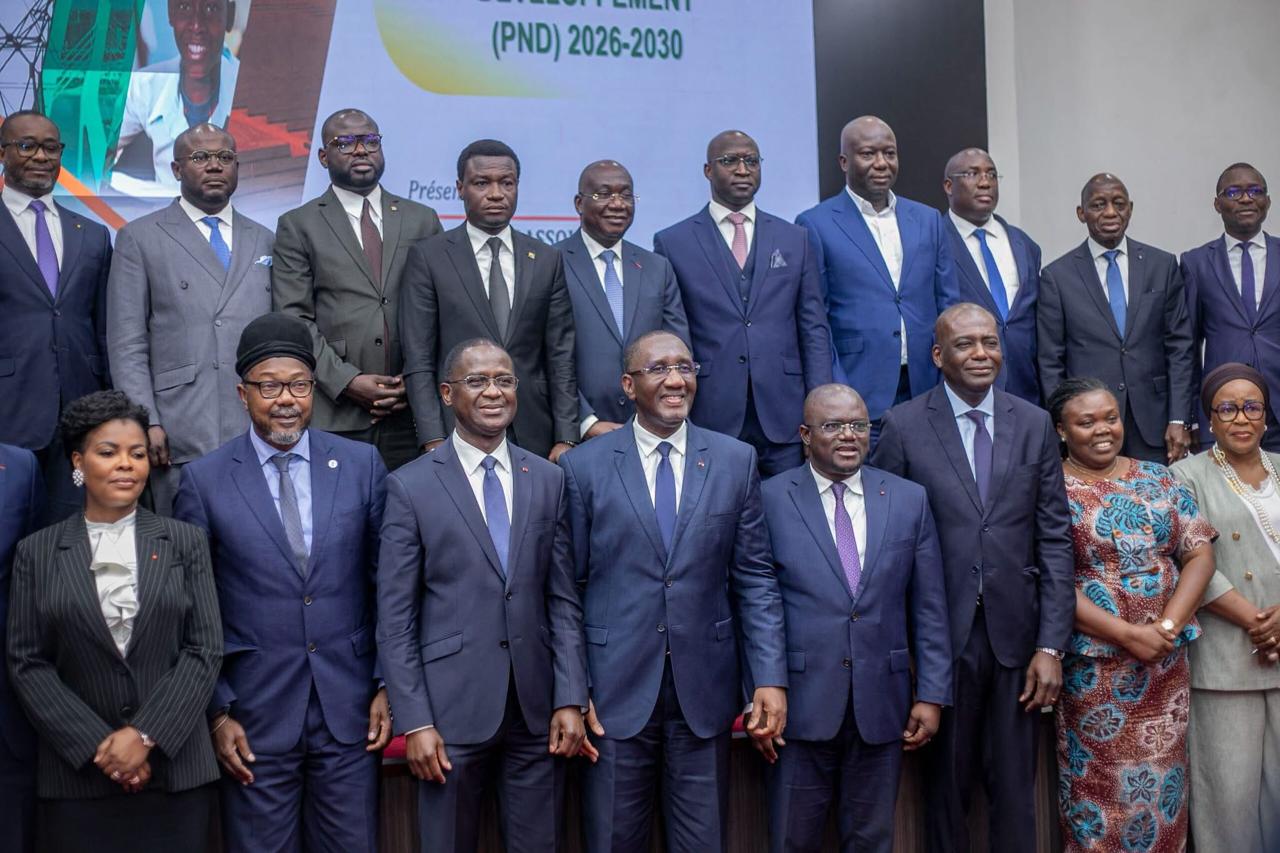
Le Ministre du Plan et du Développement, Dr Souleymane Diarrassouba, a présenté ce 22 juin 2026 le Plan national de développement (PND) 2026-2030 aux entreprises membres de la Confédération Générale des Entreprises de Côte d'Ivoire (CGECI). Avec un budget total de plus de 114 838 milliards de francs cfa, ce plan ambiti...
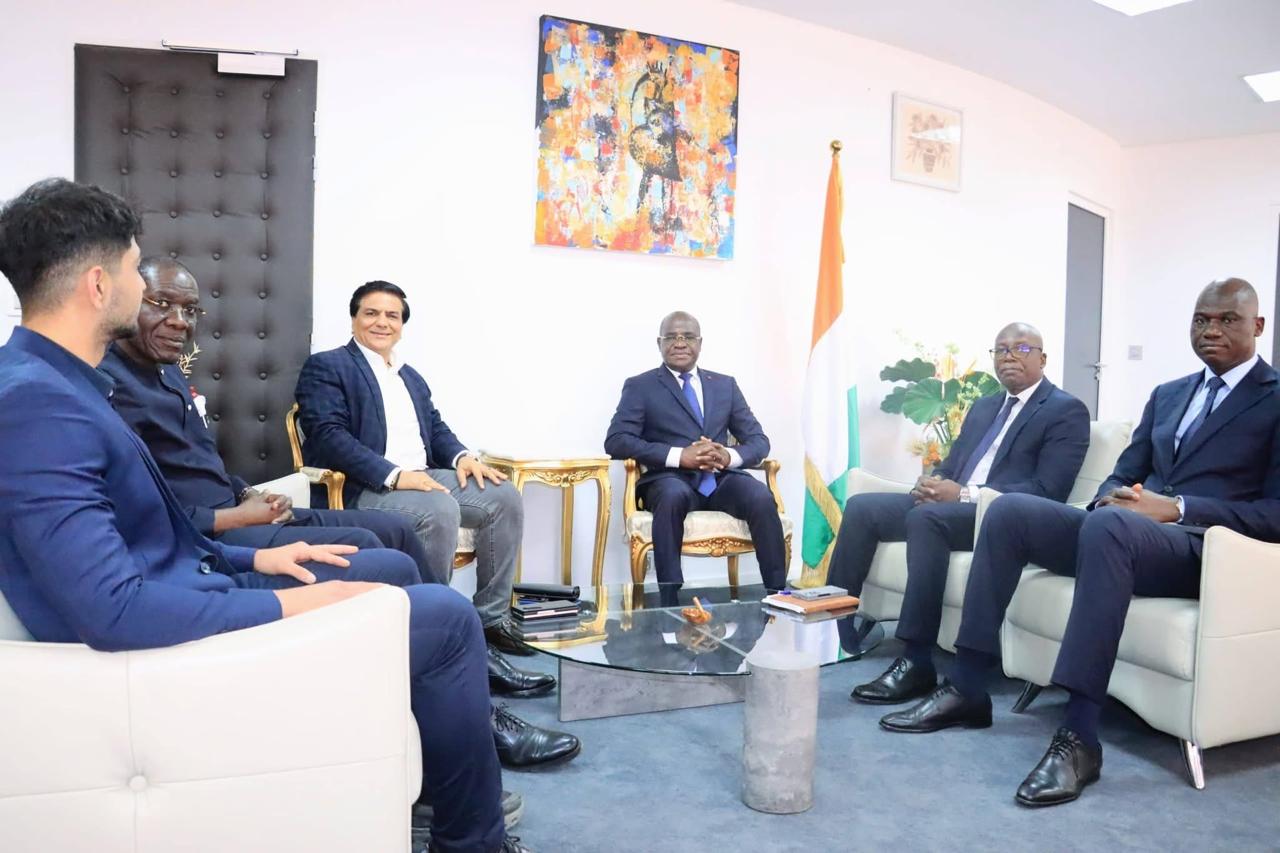
Le Ministre Kalil Konaté a accordé récemment une audience aux promoteurs des Groupes Ivoire Acier et B5, porteurs d'un projet d'investissement de 110 milliards f cfa visant à doter la Côte d'Ivoire d'infrastructures métallurgiques et pharmaceutiques de premier plan. Une initiative saluée par le gouvernement comme un le...
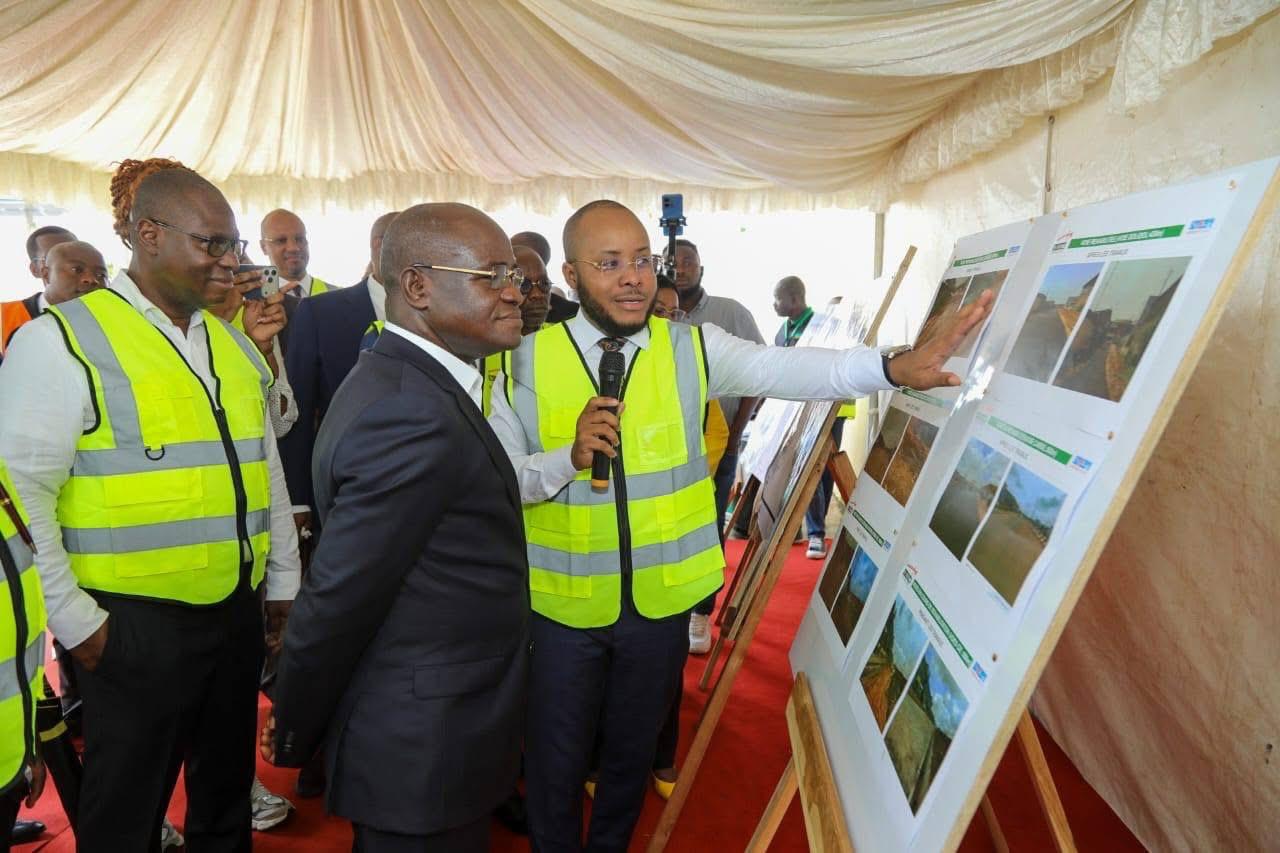
Le Ministre du Commerce, de l'Industrie et de l'Artisanat, Ibrahim Kalil Konaté, a effectué une visite de travail dans la zone industrielle (ZI) de Yopougon, le mercredi 10 juin 2026. L’objectif a été d’évaluer l'avancement des projets structurants portés par le groupe Universal Industrie, dont les investissements atte...
La Banque Africaine de Développement (BAD) confirme la montée en puissance industrielle de la Côte d'Ivoire. Selon l'Indice de l'industrialisation en Afrique 2025 (IIA 2025), Abidjan intègre le cercle fermé des dix économies les plus industrialisées du continent, avec un score de 0,6173. Une reconnaissance qui couronne...
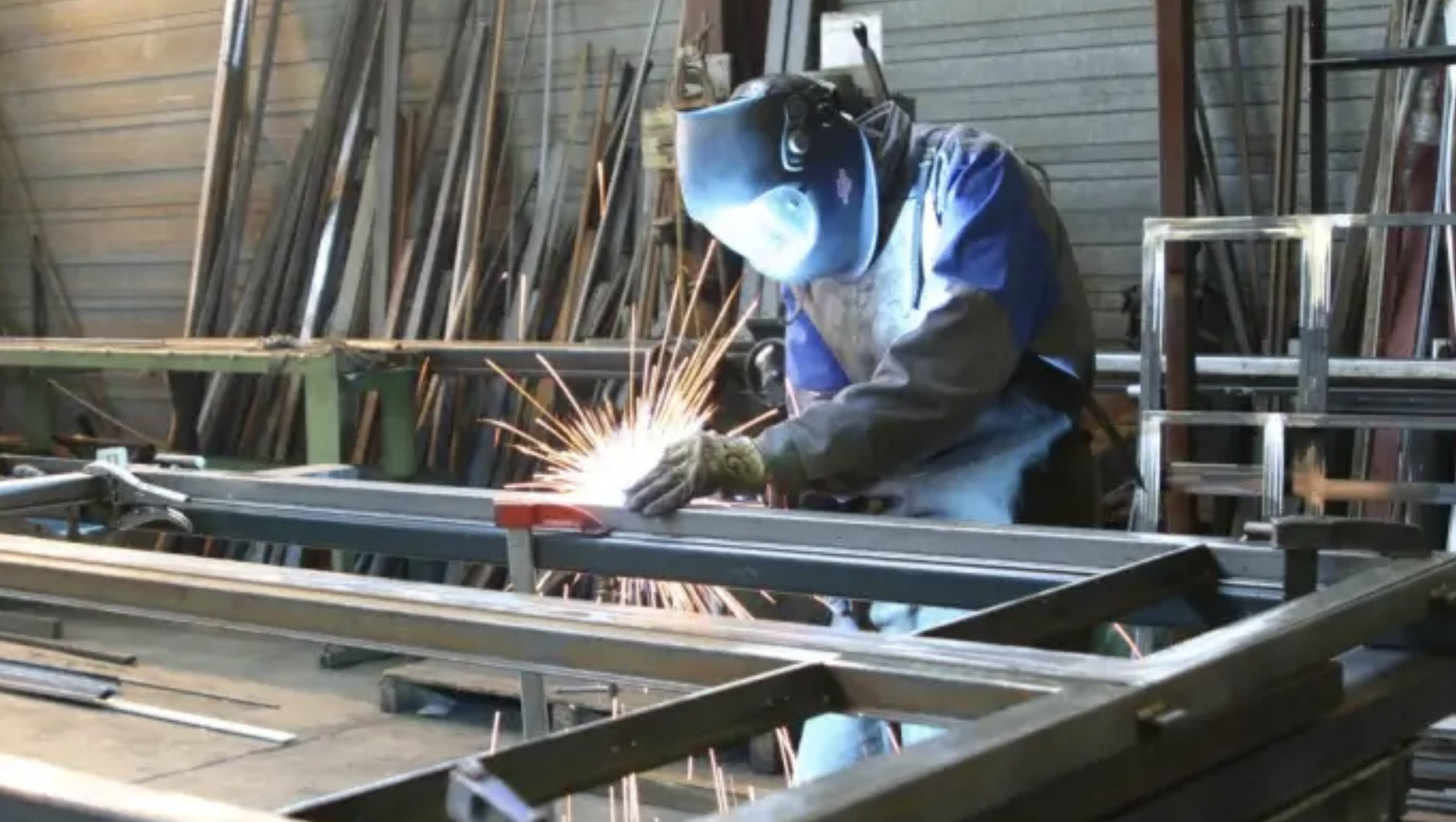
Longtemps considéré comme un secteur embryonnaire, le marché métallurgique ivoirien connaît depuis 2018 une transformation profonde. Grâce à des entreprises spécialisées, la filière s'impose désormais comme un pilier de l'industrialisation du pays. De la ferraille aux fonderies en passant par l’aluminium, la Côte d’Ivo...
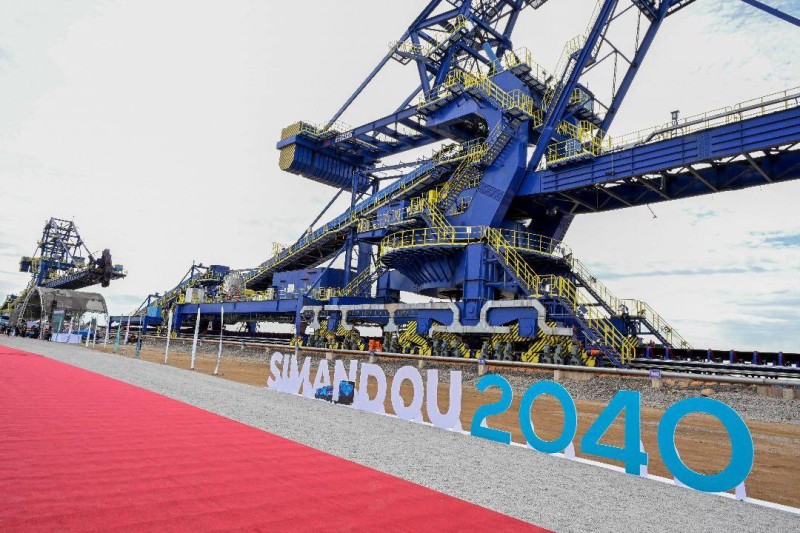
La République de Guinée a officiellement lancé, en novembre 2025, la première exportation de minerai de fer du gisement de Simandou, marquant le départ d'un programme de développement sur quinze ans capable de redessiner les équilibres économiques du continent africain.

En Côte d'Ivoire, l'industrialisation ne repose plus seulement sur les ambitions politiques, mais sur un arsenal juridique en pleine mutation. De la loi n°2025-393 du 11 juin 2025 sur les zones industrielles aux textes sur les zones franches et la normalisation, l'État affine ses outils pour attirer les investisseurs,...
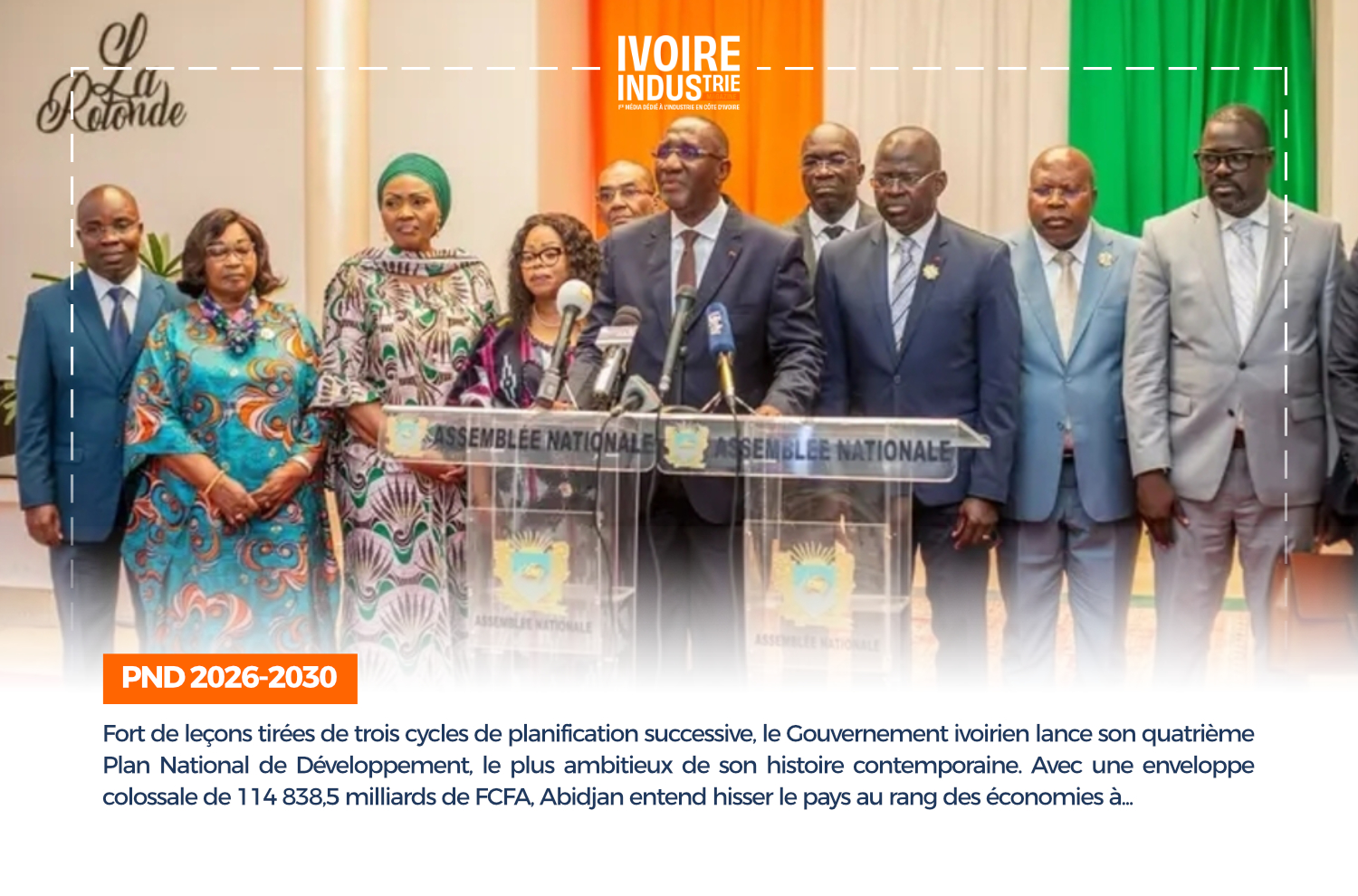
Fort de leçons tirées de trois cycles de planification successive, le Gouvernement ivoirien sous la Présidence de S.E Alassane OUATTARA lance son quatrième Plan National de Développement (PND), le plus ambitieux de son histoire contemporaine. Avec une enveloppe colossale de 114 838,5 milliards de FCFA, Abidjan entend h...
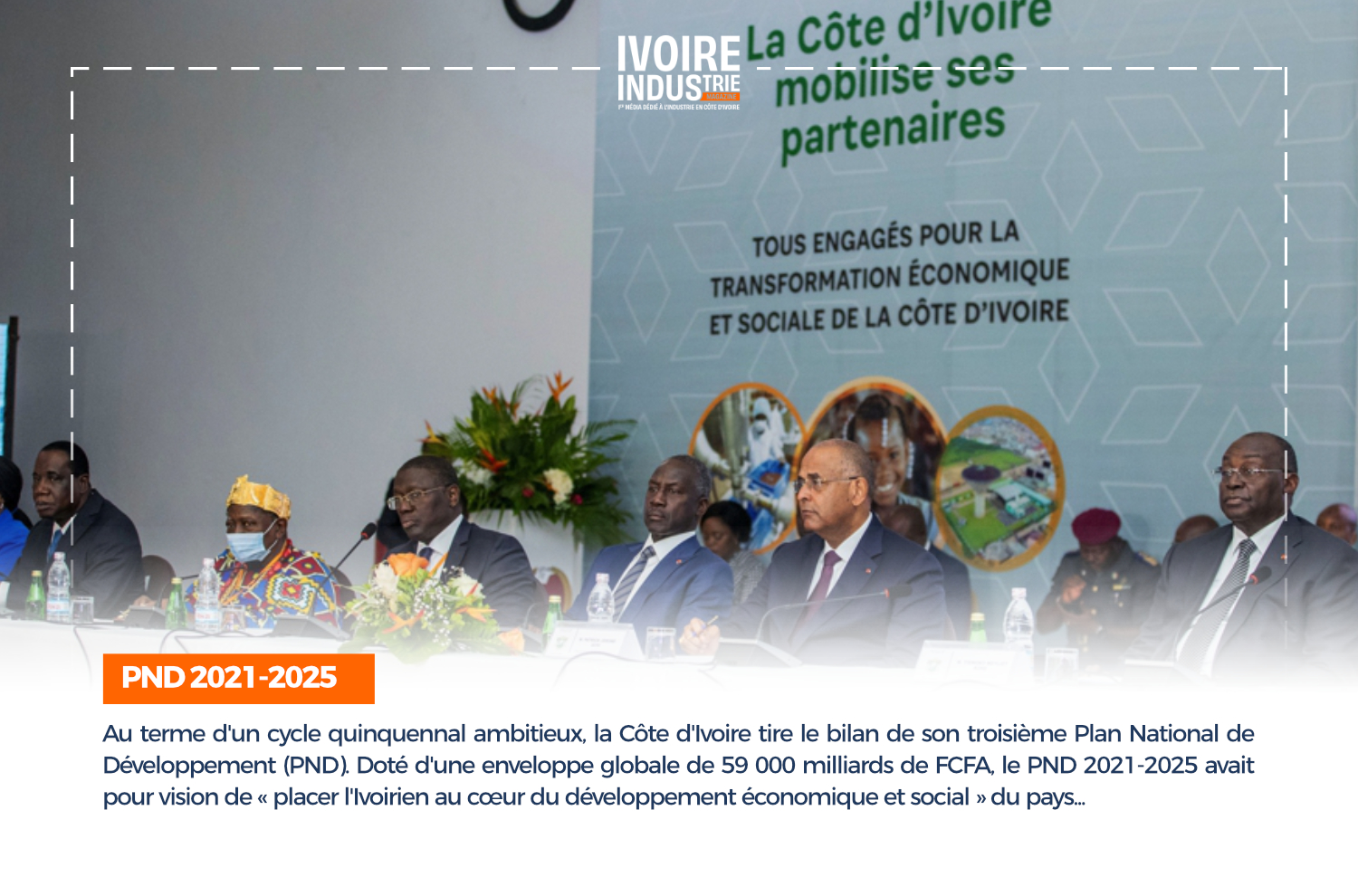
Au terme d'un cycle quinquennal ambitieux, la Côte d'Ivoire tire le bilan de son troisième Plan National de Développement (PND). Doté d'une enveloppe globale de 59 000 milliards de FCFA, le PND 2021-2025 avait pour vision de « placer l'Ivoirien au cœur du développement économique et social » du pays. Avec une stratégie...
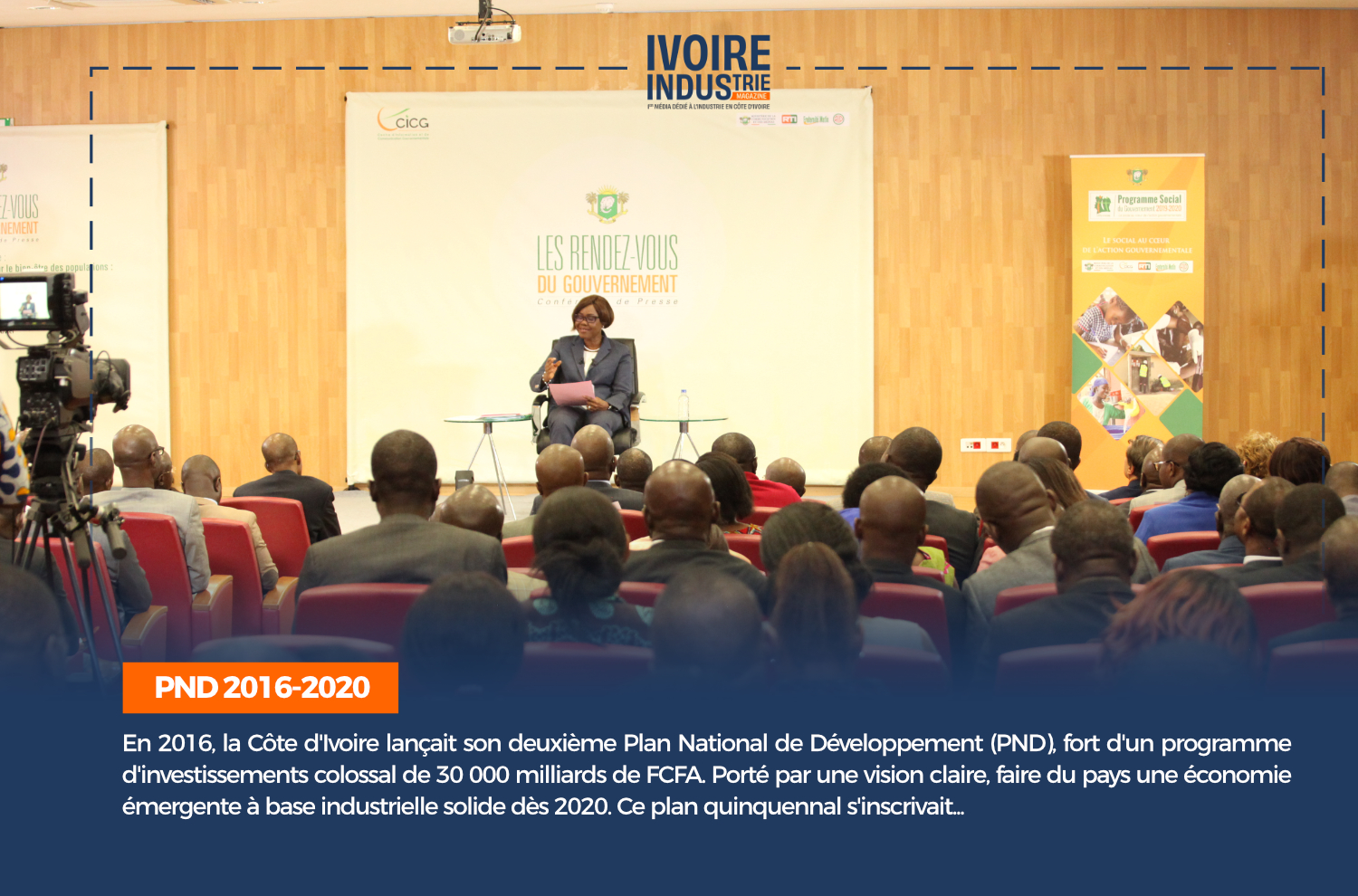
En 2016, la Côte d'Ivoire lançait son deuxième Plan National de Développement (PND), fort d'un programme d'investissements colossal de 30 000 milliards de FCFA. Porté par une vision claire, faire du pays une économie émergente à base industrielle solide dès 2020. Ce plan quinquennal s'inscrivait dans la continuité du P...
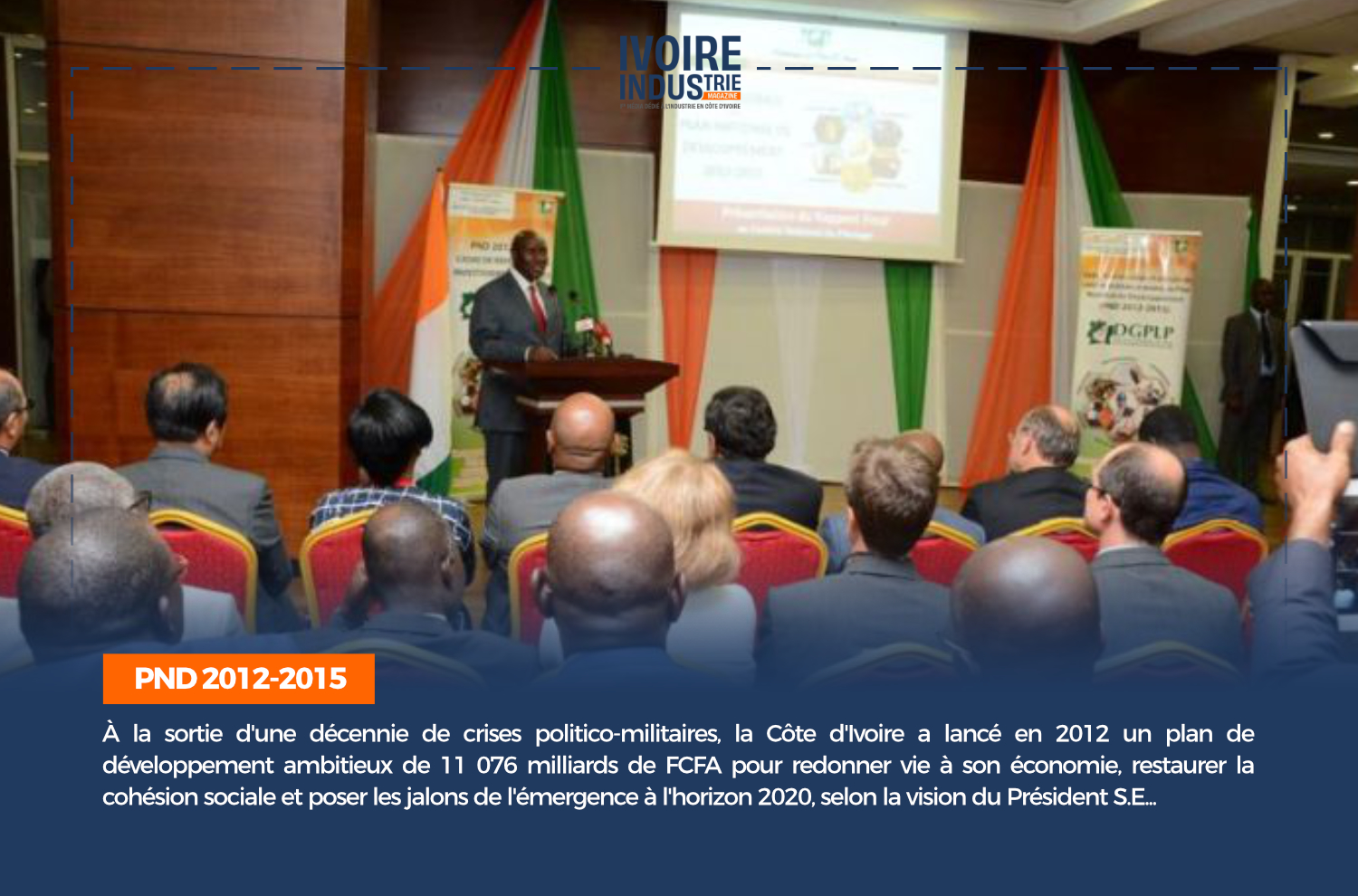
À la sortie d'une décennie de crises politico-militaires, la Côte d'Ivoire a lancé en 2012 un plan de développement ambitieux de 11 076 milliards de FCFA pour redonner vie à son économie, restaurer la cohésion sociale et poser les jalons de l'émergence à l'horizon 2020, selon la vision du Chef de l’État S.E Alassane OU...
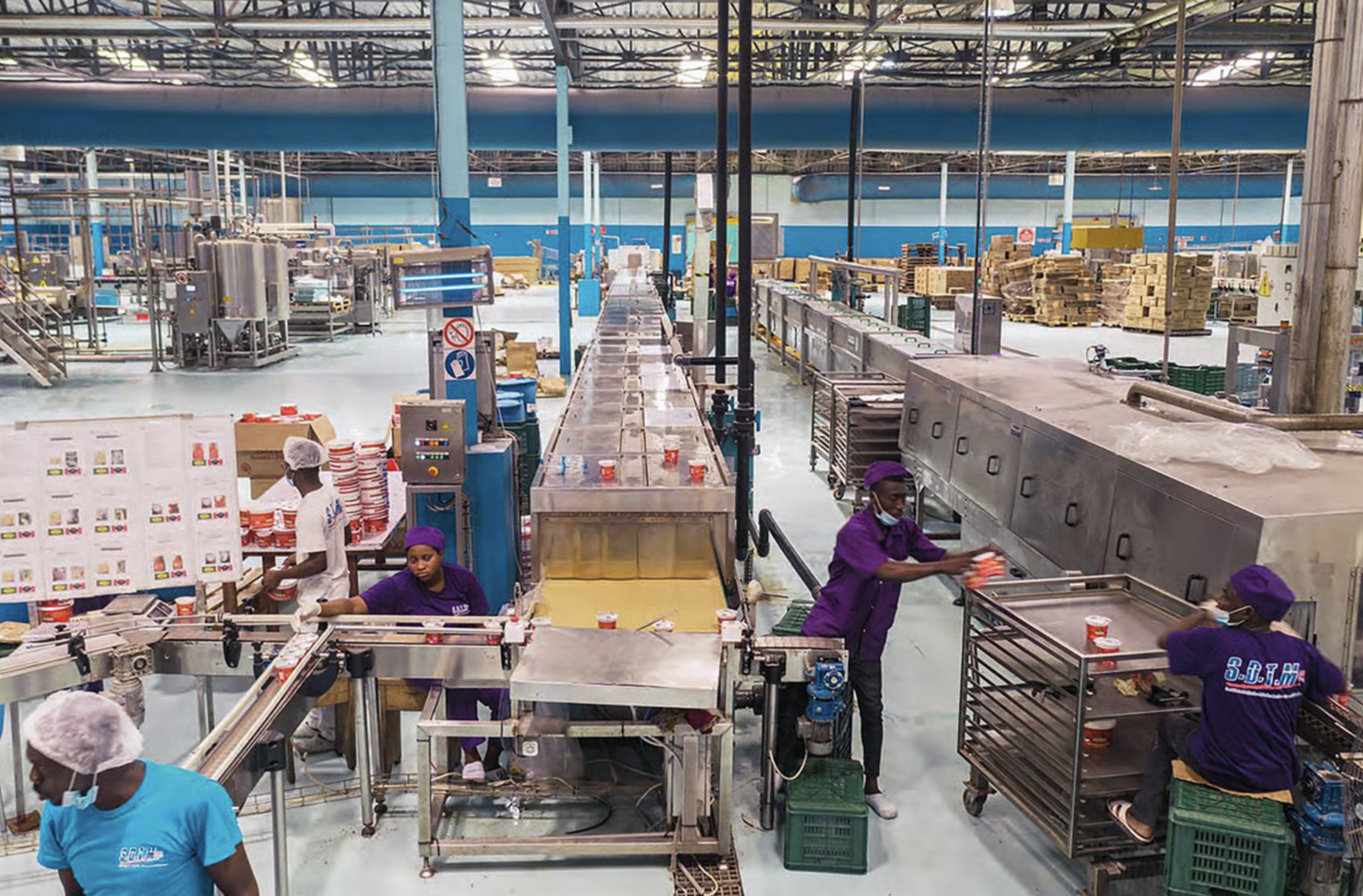
L'industrie ivoirienne vit une montée en puissance inédite. Avec un chiffre d'affaires sectoriel en hausse de 25% à fin juin 2025 et une contribution de 22,7% au PIB en 2024, le pays s'appuie sur un tissu d'usines diversifié (du cacao au ciment, en passant par les hydrocarbures) pour transformer ses matières premières...
 English
 Français