 English
 Français

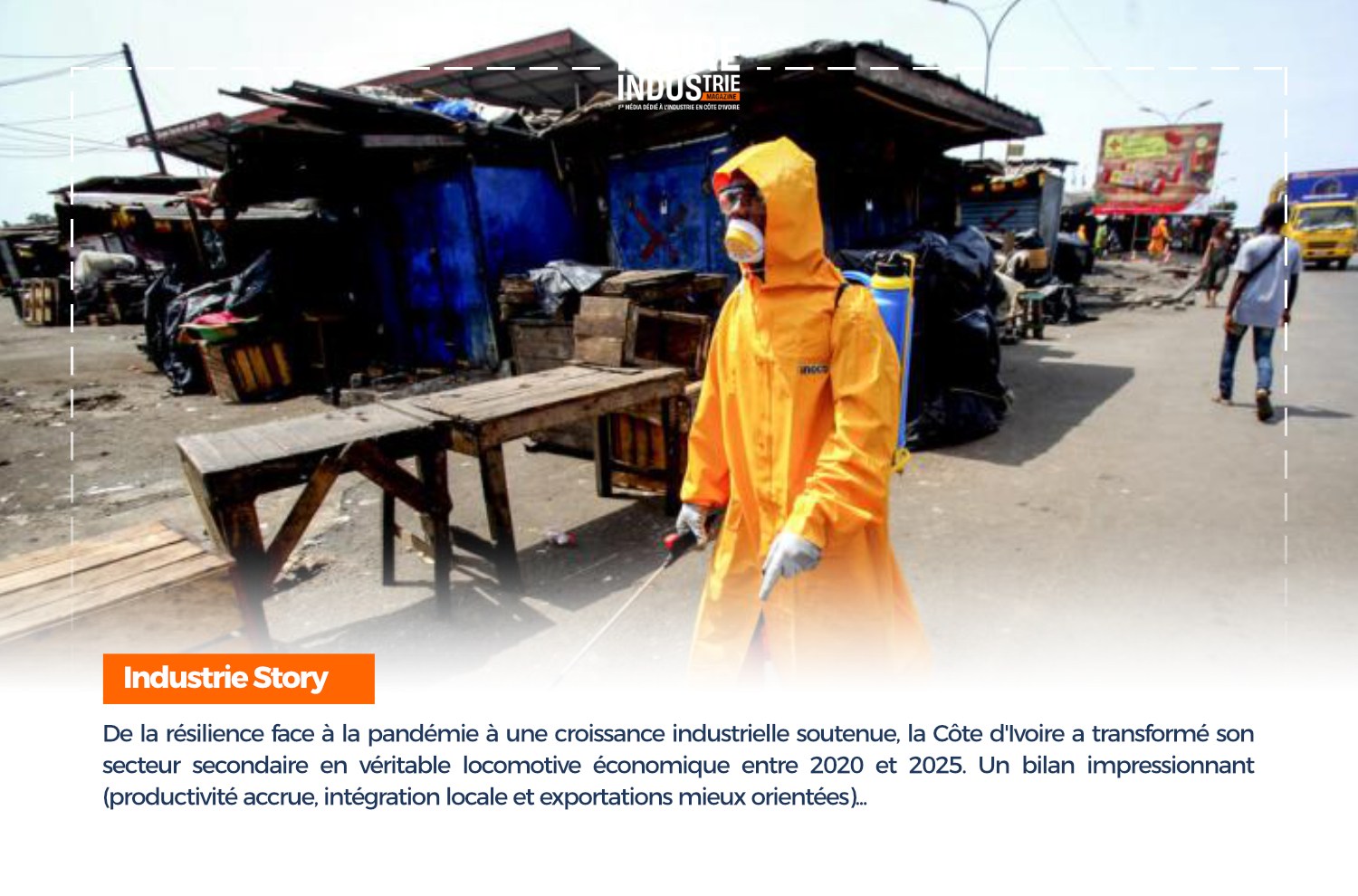
L'année 2020 aurait pu briser l'élan industriel ivoirien. La pandémie de Covid-19 a frappé de plein fouet les économies africaines, mais la Côte d'Ivoire a fait preuve d'une résilience remarquable, affichant tout de même une croissance positive de 2% cette année-là, avant un rebond vigoureux de 7,1% en 2021. Ce sursaut a posé les jalons d'une décennie industrielle ambitieuse, portée par la volonté gouvernementale de faire du secteur manufacturier l'épine dorsale de la transformation structurelle de l'économie nationale. Ainsi, le Plan national de développement (PND) 2021-2025, adopté dans ce contexte de relance, a été le cadre stratégique de cette montée en puissance. Il a fixé des objectifs clairs, tels que le développement équilibré des régions via des grappes industrielles et l’amélioration de la compétitivité des entreprises et densification des échanges extérieurs. En 5 ans, ce plan a guidé chaque investissement, chaque réforme, chaque arbitrage sectoriel.
Des chiffres qui parlent d'eux-mêmes
La trajectoire est nette. La valeur ajoutée du secteur industriel est passée de 4 230,7 milliards de FCFA en 2015 à 9 463,6 milliards de FCFA en 2023, avec une croissance moyenne annuelle de 10,6% sur la période 2015-2023. Plus significatif encore, la part du secteur industriel dans le PIB national est passée de 15,6% en 2015 à 19,8% en 2023, puis à 22,7% en 2024. Une progression de 7 points en moins d'une décennie, qui traduit une mutation profonde de la structure économique du pays. En 2025, l'accélération s'est encore confirmée. Le chiffre d'affaires du secteur industriel a bondi de 25% à fin juin par rapport à la même période de 2024, porté notamment par les industries extractives (+68,3%), grâce à l'extraction d'hydrocarbures et de minerais métalliques. En décembre 2025, la croissance annuelle du chiffre d'affaires industriel atteignait encore 14,7%. Le secteur secondaire, dans son ensemble, devait enregistrer une croissance d'environ 8% sur l'ensemble de l'année 2025, tirée par l'extraction minière (+8,7%), les produits pétroliers (+5,8%), l'énergie et les industries agroalimentaires.
Les moteurs de la dynamique
Quatre branches ont été les véritables locomotives de cette transformation industrielle. Les industries extractives ont profité de la montée en puissance du secteur minier et des hydrocarbures, la Côte d'Ivoire disposant d'atouts miniers considérables qu'elle commence à mieux valoriser. Les industries manufacturières, hors agroalimentaire et produits pétroliers, ont vu leur valeur ajoutée passer de 1 399,8 milliards à 2 493,2 milliards de FCFA entre 2015 et 2023, avec une croissance moyenne annuelle de 7,5%. L’agro-industrie reste un pilier historique de l'économie ivoirienne. Des investissements massifs ont été engagés dans la transformation du palmier à huile, du caoutchouc, du cacao et des produits vivriers. Enfin, le secteur de l'énergie a progressé de 9% au premier semestre 2025, grâce à la production et la distribution d'électricité et de gaz, soutenant à son tour l'ensemble de l'écosystème industriel. Avec une croissance économique globale projetée à 6,5% en 2025 et un secteur secondaire en pleine effervescence, le pays se positionne résolument parmi les économies africaines les plus actives. La prochaine étape (atteindre 30% du PIB industriel d'ici 2030) sera le véritable test de la maturité de ce modèle de développement.
Notons que malgré ces résultats encourageants, l'industrie ivoirienne reste confrontée à des fragilités structurelles. Les industries manufacturières, bien qu'en progression absolue, voient leur part relative dans le secteur secondaire reculer, (passant de 25,7% à 20,6% entre 2015 et 2023) signe que la croissance est davantage tirée par l'industrie extractive et l'énergie que par la transformation locale à forte valeur ajoutée. Face à un tel constat, certains experts et institutions soulignent la nécessité de stimuler le secteur privé, d'améliorer les infrastructures, de renforcer les compétences et d'intégrer davantage les chaînes de valeur mondiales pour une industrialisation réellement inclusive.