 English
 Français

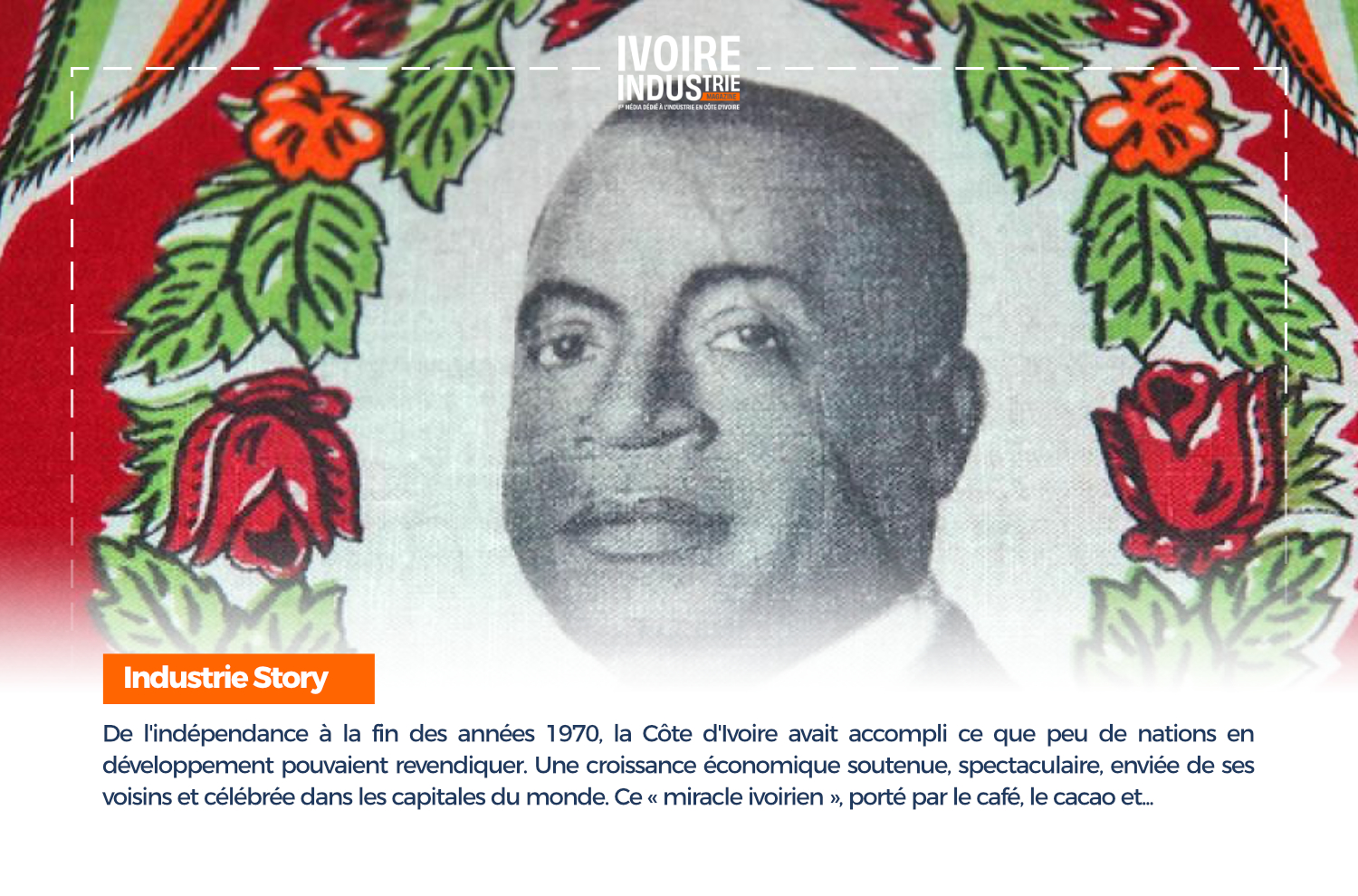
En 1960, à l'heure où la Côte d'Ivoire proclame son indépendance, Félix Houphouët-Boigny choisit délibérément d'aller à contre-courant du continent. Pendant que ses voisins se tournaient vers le socialisme d'État, le Ghana de N'Krumah, la Guinée de Sékou Touré, le Mali de Modibo Keïta, Abidjan optait pour le libéralisme économique, la stabilité politique et l'ouverture aux capitaux étrangers. Cette stratégie fondatrice allait porter ses fruits de manière spectaculaire. Les chiffres sont éloquents. Le PIB ivoirien, qui atteignait 140 milliards de francs CFA en 1960, bondissait à 478,8 milliards en 1977-1978. Sur la même période, le taux de croissance annuel, qui se situait à 3,8% à l'indépendance, culminait à 11,4% en 1977-1978, soit six fois la moyenne des pays africains en développement, alors bloqués à 1,8%. Entre 1960 et 1965, le taux de croissance moyen atteignit même 10,2%, puis se maintint à 6,8% entre 1970 et 1975, surpassant à la fois l'Afrique noire (4%) et les pays occidentaux (6%).
Le café et le cacao, véritables moteurs du miracle
Le binôme café-cacao constitua le poumon de cette économie triomphante. En 1960, la Côte d'Ivoire produisait 185 500 tonnes de café et 93 605 tonnes de cacao. En 1980, ces chiffres atteignaient respectivement 200 000 tonnes de café et 336 000 tonnes de cacao. Le revenu garanti aux paysans producteurs de café bondissait de 16,7 milliards à 60 milliards de francs CFA sur la même période, tandis que les planteurs de cacao voyaient leurs gains passer de 7,9 milliards à 100,8 milliards de francs CFA. En 1978, c’est la consécration suprême, pour la première fois de son histoire, la Côte d'Ivoire devenait le premier producteur mondial de cacao avec une production record de 312 000 tonnes. Cependant, le pays ne se contentait pas de ses plantations. Le secteur industriel connut lui aussi une progression remarquable. De 1959 à 1963, le chiffre d'affaires des industries ivoiriennes passa de 8 à 20 milliards de francs CFA. De 1960 à 1970, la production industrielle crut à un taux moyen de 15% par an, et la part de l'industrie dans le PIB progressait de 15,2% à 25%. En 1977, le secteur industriel réalisait un chiffre d'affaires total de 459 milliards de francs CFA, employant 63 000 travailleurs, et en 1979, on dénombrait 619 entreprises de production distribuant 75,2 milliards de francs CFA de salaires. Les dépenses publiques, gonflées par les recettes cacaoyères, bondissaient de moins de 30% du PIB dans les années 1960 à 42,4% en 1978.
Un modèle social sans équivalent en Afrique subsaharienne
La réussite ivoirienne ne se mesurait pas qu'en termes marchands. Le gouvernement investissait massivement dans le capital humain, avec 43% du budget national était consacré à l'éducation, contre une moyenne de 25% dans les autres pays africains, et 7% à la santé, contre 4,5% pour ses pairs continentaux. Le résultat le plus visible de cet effort était le taux de scolarisation passa de 15% en 1960 à 70% en 1978, une performance sans précédent pour un pays de la région. Abidjan était alors proclamée « vitrine de l'Afrique occidentale », ville-phare d'un continent en quête de modèles. Comme envers du décor, le miracle portait en lui les germes de sa propre vulnérabilité. La croissance agricole, qui flirtait avec 10% par an entre 1950 et 1964, n'était plus que de 2% entre 1972 et 1978. La dette publique quadruplait au cours des années 1970, passant de 18,7% du PIB en 1970 à 45% en 1980. Pire, 54,43% du capital des entreprises opérant en Côte d'Ivoire était détenu par des intérêts étrangers, dont 31,94% pour la France seule. Lorsque les cours mondiaux du café et du cacao s'effondrèrent à la fin des années 1970, conjugués au second choc pétrolier de 1979, l'édifice commença à vaciller.
Retenons que le miracle ivoirien des années 1960-1980 reste une leçon d'histoire économique à méditer. Il démontre qu'un pays africain peut, grâce à une gouvernance stable, à une vision libérale cohérente et à une valorisation de ses matières premières, atteindre des taux de croissance dignes des « tigres asiatiques ». Mais il illustre aussi la limite d'un modèle extraverti, fondé sur la rente agricole et la dépendance aux cours mondiaux. Ainsi, sans diversification structurelle ni appropriation locale du capital, même le plus beau des miracles reste une construction fragile.