 English
 Français

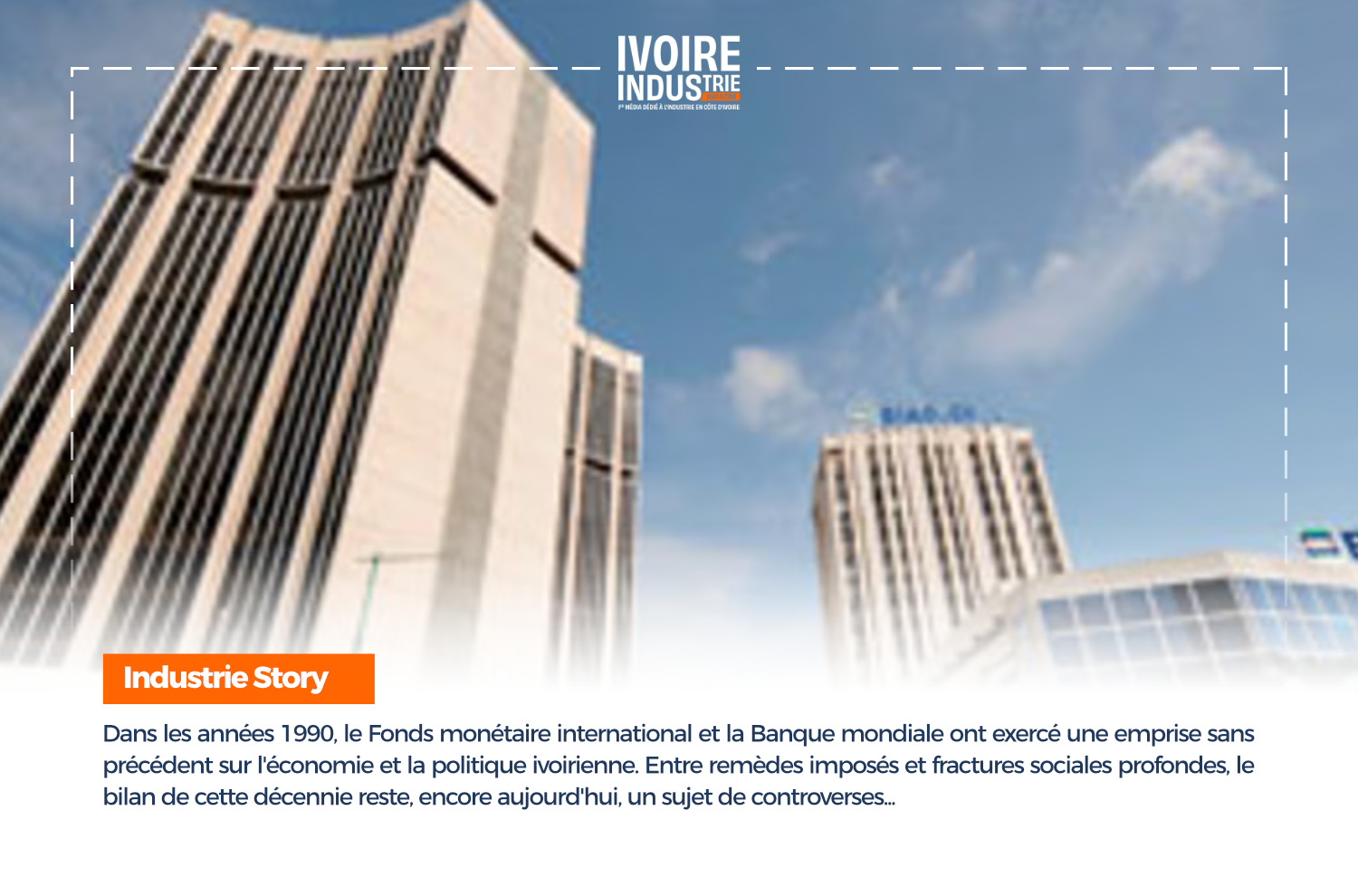
Il fut un temps où la Côte d'Ivoire incarnait la réussite africaine. Entre 1960 et 1978, portée par l'exportation du café et du cacao, elle connaît une croissance spectaculaire qui lui vaut le titre de « miracle ivoirien ». Mais la chute brutale des cours des matières premières à la fin des années 1970, combinée à une politique d'endettement massif, précipite le pays dans une crise économique sévère. C'est dans ce contexte de vulnérabilité que les institutions de Bretton Woods (le FMI et la Banque mondiale) font leur entrée décisive sur la scène ivoirienne. Dès 1981, sous la pression des créanciers internationaux, Abidjan signe son premier Programme d'Ajustement Structurel (PAS). Entre 1980 et 1993, la Côte d'Ivoire conclura pas moins de cinq PAS avec ces institutions. La logique est claire, en échange de financements, l'État ivoirien doit se soumettre à un ensemble de conditionnalités néolibérales (réduction des dépenses publiques, privatisations, libéralisation des marchés). Une tutelle économique s'installe durablement à Abidjan.
Houphouët-Boigny sous pression
La relation entre le pouvoir ivoirien et les institutions financières internationales n'est pas d'emblée celle d'une soumission totale. Jusqu'à la fin des années 1980, le Président Félix Houphouët-Boigny résiste partiellement à la rigueur exigée, bénéficiant d'un rapport de forces encore favorable grâce à l'appui de Paris. La France, fidèle à ses réseaux africains, compense en coulisses les manques à gagner. Elle verse à la Côte d'Ivoire 78,2 milliards de francs CFA en 1992 et 126,7 milliards en 1993 pour lui permettre de faire face à ses échéances extérieures. Mais les institutions financières durcissent progressivement leur position. L'une des stratégies explicites du FMI et de la Banque mondiale est alors, selon les analystes, d'affaiblir le pouvoir présidentiel qu'elles tiennent pour responsable de la profondeur de la crise. En 1989-1990, sous cette pression accrue, Houphouët-Boigny se résigne à diviser par deux le prix garanti aux producteurs de cacao. Ce sacrifice rompt l'alliance historique du régime avec les planteurs (pilier du clientélisme ivoirien) et déclenche une contestation sociale généralisée.
L'ajustement comme détonateur politique
Les conséquences politiques de cette période d'austérité sont considérables. En 1990, la crise économique engendrée par les mesures d'ajustement provoque deux bouleversements majeurs. L’on assiste à l’instauration du multipartisme et la nomination d'un Premier ministre. Ce poste est confié à Alassane Dramane Ouattara, alors gouverneur de la BCEAO et ancien directeur du département Afrique au FMI, un choix qui illustre à lui seul l'influence des institutions de Bretton Woods sur la gouvernance ivoirienne. En 1992, après l'échec à atteindre les objectifs convenus, le FMI et la Banque mondiale suspendent leurs financements à la Côte d'Ivoire, entraînant dans leur sillage tous les autres bailleurs de fonds. Le pays se retrouve pratiquement isolé sur la scène financière internationale. Seule la France maintient son soutien, retardant ainsi une rupture totale. Cette suspension marque l'apogée d'un bras de fer qui révèle toute la fragilité de la souveraineté économique ivoirienne.
Des réformes aux effets dévastateurs
Sur le plan social, le bilan des PAS est lourd. La suppression des subventions, les coupes dans les services publics et l'ouverture précipitée aux importations sapent les bases productives locales. Les programmes accentuent la spécialisation de la Côte d'Ivoire dans l'exportation de matières premières brutes, verrouillant son économie dans une position subalterne au sein des chaînes de valeur mondiales. La paupérisation d'une grande partie de la population s'accélère, tandis que la répression syndicale et politique s'intensifie. Dans le secteur agricole et commercial, la libéralisation impose également des recompositions profondes. La disparition progressive de la Caistab (la caisse de stabilisation) permet aux multinationales américaines de s'imposer sur le marché du cacao au détriment des opérateurs nationaux moins compétitifs. La « victoire » des institutions financières se traduit ainsi par le remplacement d'un monopole étatique par un oligopole étranger privé, loin des promesses d'efficacité et de croissance annoncées. Aussi, la dévaluation du franc CFA en janvier 1994, décision prise sous l'impulsion conjuguée du FMI et de la France, marque une étape supplémentaire dans cette décennie de turbulences. Si elle redonne temporairement une compétitivité aux exportations ivoiriennes, ses effets sur le pouvoir d'achat des ménages sont immédiatement douloureux.
Pour conclure, la décennie 1990 laisse à la Côte d'Ivoire une dette extérieure persistante, un tissu social fragilisé et une dépendance structurelle aux institutions financières internationales. Les critiques les plus acérées soulignent l'inadéquation fondamentale entre les réformes institutionnelles proposées par les institutions de Bretton Woods et les besoins réels du pays. Cette incapacité à gérer de l'extérieur des processus aussi complexes que les réformes économiques et politiques constitue, selon de nombreux analystes, la leçon centrale de cette période, une leçon que le continent africain porte encore dans sa chair.