 English
 Français

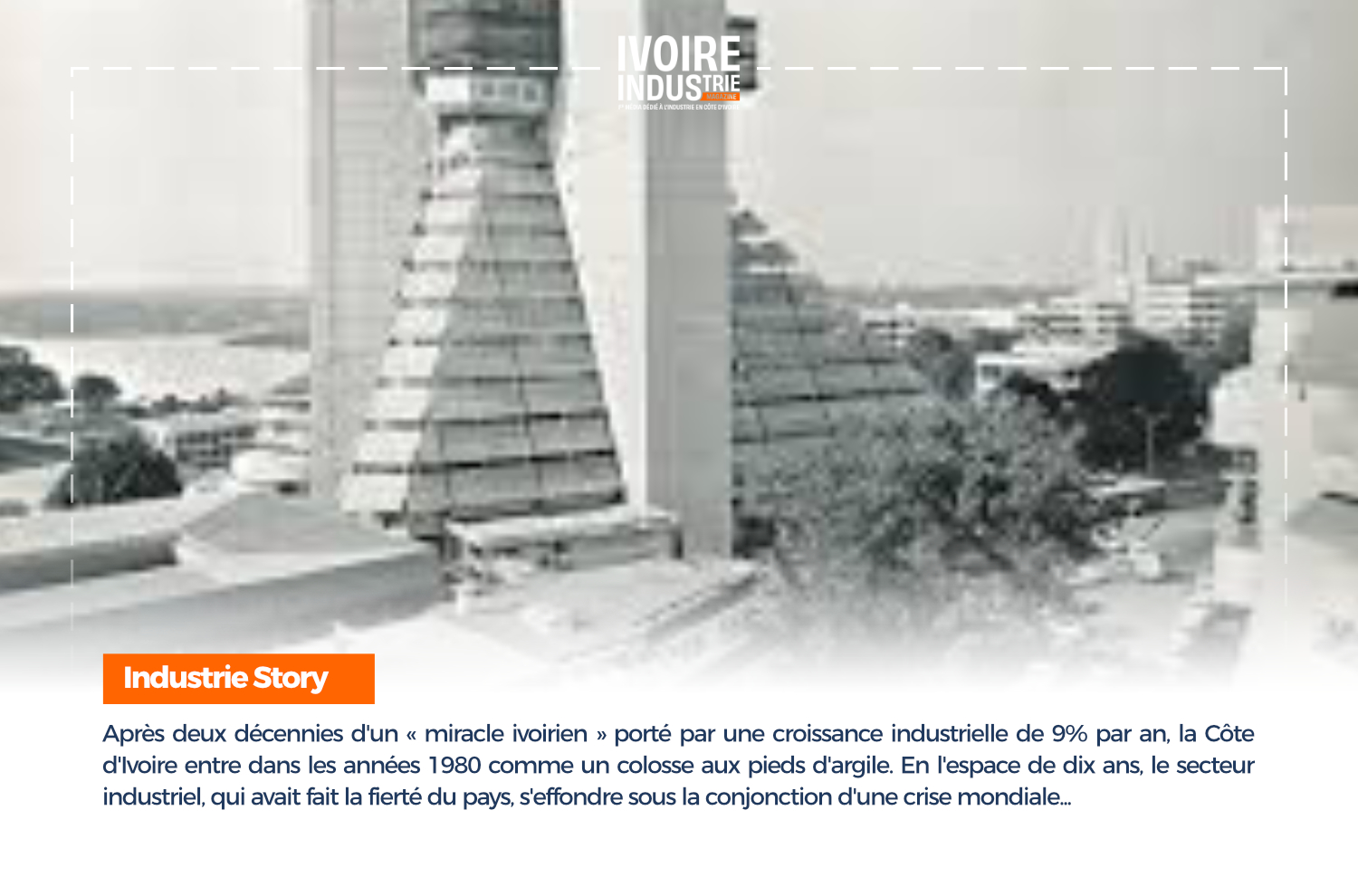
Afin de mieux cerner le choc des années 1980, il faut d'abord mesurer la hauteur de la chute. Entre 1960 et 1980, la Côte d'Ivoire avait réussi un pari que peu de pays africains pouvaient revendiquer. Une croissance économique soutenue de 7% en moyenne par an, portée en partie par un secteur industriel dont le taux de croissance propre atteignait 9%. Le PIB par habitant avait bondi de 551 dollars à 1 068 dollars entre 1960 et 1979, et le pays s'était doté d'une structure industrielle diversifiée (agro-alimentaire, textile, chimie, bois) qui constituait l'épine dorsale de l'économie nationale. Ce modèle reposait néanmoins sur des fondations fragiles. L'économie demeurait profondément extravertie et dépendante des exportations de matières premières agricoles, principalement le cacao et le café, sans véritable transformation locale à grande échelle. Les plans quinquennaux successifs (1971-1975, puis 1976-1980) avaient certes orienté l'industrie vers les activités d'exportation et l'État avait injecté plus de 685 milliards de francs CFA entre 1976 et 1980 en dépenses de développement industriel, mais le tissu de PME locales restait insuffisant pour assurer une industrialisation compétitive et durable.
Le choc de 1980 : un modèle à l'épreuve
Le tournant de 1980 est brutal. La détérioration des termes de l'échange sur les marchés mondiaux des matières premières, combinée au choc pétrolier de 1979 qui alourdit considérablement les charges des entreprises, plongent l'économie dans une récession sévère. L'industrie ivoirienne, qui avait bénéficié de conditions extérieures favorables, se retrouve fréquemment exposée à sa propre vulnérabilité structurelle. À savoir une dépendance aux importations de matières premières, des coûts de production élevés et un marché de consommation intérieur étroit. Le surendettement de l'État, qui avait financé à crédit les grands projets agro-industriels et infrastructurels de la décennie précédente (complexes sucriers, industries papetières, programme énergétique), devient un boulet financier. La dette atteint 3 500 milliards de francs CFA, hypothéquant durablement les capacités d'investissement public dans le secteur industriel. La grande sécheresse de 1983 a aggravé la situation en perturbant l'approvisionnement des usines en énergie électrique et en matières premières agricoles.
La restructuration à marche forcée : les plans de 1981-1985 et 1985-1993
Face à l’ampleur de la crise, l’État ivoirien ne reste pas inactif. Il engage une politique de restructuration industrielle en deux phases, couvrant d'abord la période 1981-1985, puis 1985-1993. Le plan quinquennal 1981-1985, mis en place en période de récession avérée, fixe trois objectifs prioritaires : rechercher la croissance maximale de la valeur ajoutée industrielle, améliorer la compétitivité de l'industrie nationale, et accélérer l'ivoirisation des capitaux et des emplois. Un accent particulier est mis sur les industries agro-alimentaires, considérées comme le levier le plus accessible dans un pays dont l'agriculture demeure le socle économique. Les résultats restent en deçà des attentes. En réponse, l'État adopte à partir de 1984 un nouveau code d'investissement qui actualise et améliore celui de 1959. Ce texte ouvre pour la première fois aux PME industrielles l'accès aux avantages fiscaux réservés jusque-là aux grandes entreprises agréées, et incite à l'implantation industrielle dans les régions intérieures du pays en instituant une aide à la valeur ajoutée variable selon trois zones géographiques. Entre 1984 et 1995, ce code permettra l'octroi de 293 agréments aux entreprises (contre 221 sous l'ancien régime) favorisant la création de 148 nouvelles entreprises industrielles et la restructuration de 113 unités en difficulté.
Les années 1985-1990 : la pression du FMI et ses conséquences sociales
La seconde moitié de la décennie est marquée par l'entrée en scène du Fonds Monétaire International et de la Banque Mondiale. Sous la pression des programmes d'ajustement structurel, le gouvernement ivoirien est contraint à une série de mesures particulièrement impopulaires. Le blocage et la réduction des salaires, les licenciements massifs dans le secteur public, la flambée des prix des denrées de base (hausse de 50%), l’inflation galopante atteignant 15%, l’augmentation de la TVA de 43% et ainsi que la suppression de nombreuses subventions sociales. Ces mesures pèsent lourdement sur la demande intérieure en produits manufacturés, étouffant davantage un tissu industriel déjà fragilisé. Sur le plan social, la fracture est profonde. Le PIB par habitant, qui était de 1 215 dollars en 1980, entame une chute libre pour atteindre 816 dollars en 1993. Le chômage progresse, notamment chez les jeunes, et le pouvoir d'achat des ménages s'érode considérablement. C'est dans ce contexte de tensions sociales croissantes que naît une contestation politique organisée, portée par des syndicats autonomes qui remplacent progressivement le syndicalisme unifié de l'Union Générale des Travailleurs de Côte d’Ivoire (UGTCI). La période 1985-1990 marque ainsi le début d'une remise en cause profonde du modèle politique et économique du PDCI-RDA.
Le secteur industriel en chiffres : une décennie de décrochage
Sur le plan structurel, la décennie 1980-1990 illustre l'incapacité chronique de l'industrie ivoirienne à dépasser le seuil des 20% du PIB, dont 16% pour le secteur industriel moderne. La stratégie d'industrialisation par les entreprises d'État, privilégiée depuis les années 1970, contribue à réduire la compétitivité industrielle au lieu de la renforcer. Les entreprises publiques, mal gérées et souffrant d'une gouvernance défaillante mise en lumière par plusieurs audits de l'époque, accumulent des déficits et des détournements de fonds. La Côte d'Ivoire, qui était au tournant de 1980 le premier investisseur africain en proportion du PIB dans le secteur de la production, voit cette position s'éroder rapidement. L'une des faiblesses les plus criantes reste l'insuffisance du réseau de PME locales, incapables de constituer un contrepoids à la domination des capitaux étrangers et de créer un véritable processus concurrentiel d'industrialisation endogène. Les filières d'exportation (textile, bois, agro-alimentaire) subissent des pertes de compétitivité face à la concurrence internationale, dans un contexte de franc CFA maintenu à parité fixe avec le franc français, ce qui pénalise les exportations industrielles.
Vers la privatisation : prémices d'un nouveau paradigme
Au début des années 1990, la réponse de l'État à l'échec de l'industrialisation étatique prend la forme d'une politique de privatisation, élaborée sous l'impulsion des institutions de Bretton Woods. La loi n°90-1610 du 28 décembre 1990 régit ce nouveau dispositif, qui consiste à transférer progressivement par la vente d'actifs les sociétés d'État à caractère industriel. Cette politique marque une rupture idéologique majeure. L’État, qui avait été l'acteur central de l'industrialisation depuis l'indépendance, se retire progressivement du capital des entreprises au profit du secteur privé. Cette transition, bien qu'imposée par les circonstances, porte en elle les germes d'un futur redressement. La reprise de la croissance, qui interviendra à partir de 1994 à la faveur de la dévaluation du franc CFA, confirmera rétrospectivement que l'ajustement structurel, aussi douloureux soit-il sur le plan social, était une étape nécessaire pour assainir les fondements d'une économie industrielle viable.
En sommes, la décennie 1980-1990 n'est pas simplement une parenthèse malheureuse dans l'histoire industrielle ivoirienne, elle est le révélateur d'un modèle de développement dont les contradictions structurelles étaient inscrites depuis l'origine. Construite sur l'extraversion économique, la dépendance aux capitaux étrangers, la faiblesse du tissu de PME locales et le primat de la rente agricole sur la transformation industrielle, l'industrie ivoirienne portait en elle les germes de sa fragilité bien avant que la crise mondiale des années 1980 ne vienne en précipiter l'effondrement. Cependant, cette décennie aura au moins eu le mérite de poser, douloureusement mais utilement, les questions fondamentales que la Côte d'Ivoire d'aujourd'hui continuent encore de chercher à résoudre : comment industrialiser durablement, à partir de ses propres ressources humaines et naturelles ?