 English
 Français
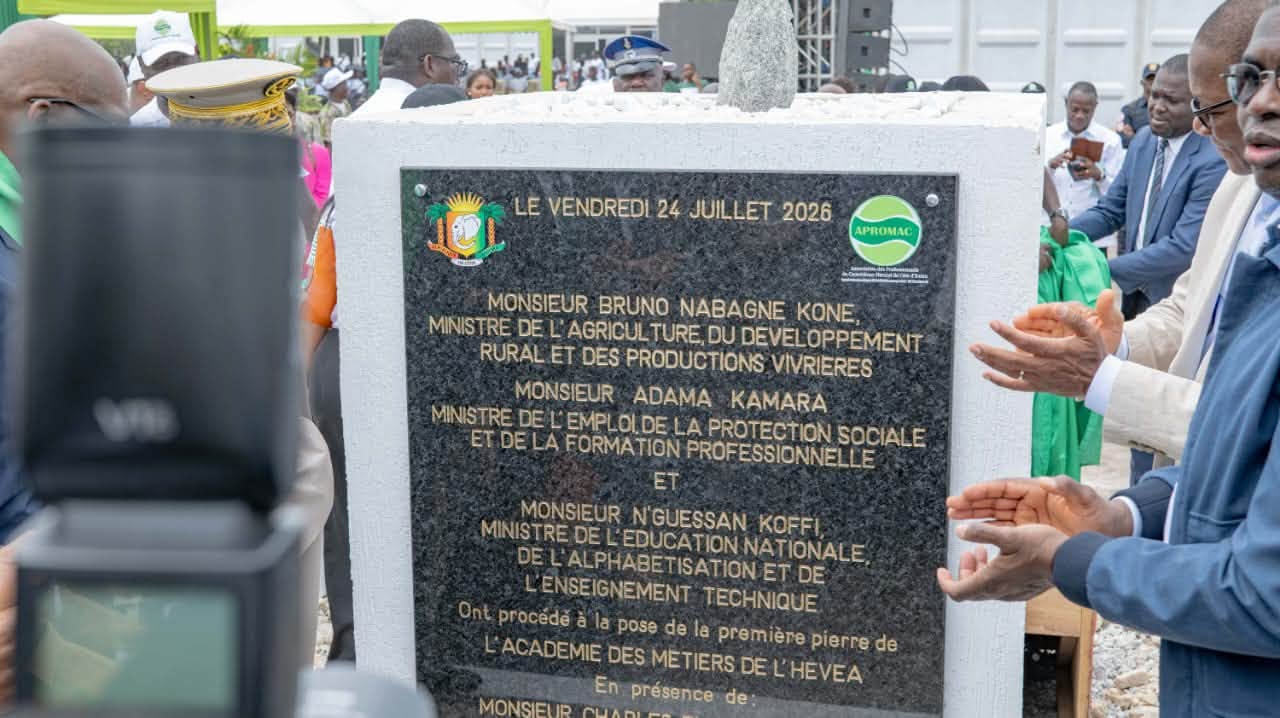
Lancé le 24 juillet 2026, à Ahouakro par l'Association des professionnels du caoutchouc naturel de Côte d'Ivoire (APROMAC), la construction de l'Académie des métiers de l'hévéa ouvre une nouvelle étape de développement dans cette filière. Ce centre de formation vise à doter le secteur d'une main d'œuvre qualifiée pour accompagner l'essor de l'industrie du caoutchouc naturel. L'initiative répond aux besoins croissants des entreprises de transformation, tout en favorisant l'insertion professionnelle des jeunes et des femmes. Selon le Conseil Hévéa Palmier à Huile, la Côte d'Ivoire demeure le premier producteur africain de caoutchouc naturel. La filière rassemble plus de 200 000 planteurs et fait vivre directement ou indirectement près d'un million de personnes. L'hévéa constitue aujourd'hui la deuxième source de recettes agricoles d'exportation du pays après le cacao. Les statistiques de la FAO et de l'APROMAC indiquent que la production nationale dépasse régulièrement 1,5 million de tonnes de caoutchouc naturel par an, confirmant la place stratégique du pays sur le marché mondial.
Former pour répondre aux besoins de l'industrie
L'Académie des métiers de l'hévéa aura pour mission de former des saigneurs, des techniciens, des agents de maintenance et des spécialistes des procédés industriels. Les enseignements porteront également sur les bonnes pratiques agricoles, la qualité des produits, la sécurité au travail et les exigences de traçabilité devenues incontournables avec l'entrée en vigueur progressive du règlement européen sur la déforestation. Cette montée en compétences doit permettre aux entreprises de disposer d'un personnel qualifié capable d'améliorer les rendements, réduire les pertes et renforcer la qualité du caoutchouc transformé localement. Au-delà de la formation, cette académie s'inscrit dans la stratégie nationale de valorisation locale des matières premières agricoles. En développant les compétences techniques, la filière entend accroître la transformation industrielle, créer davantage d'emplois qualifiés et renforcer l'attractivité de la Côte d'Ivoire auprès des investisseurs.
Pour l'APROMAC, le développement de la filière ne peut plus reposer uniquement sur l'augmentation de la production. La compétitivité passera désormais par la qualification des ressources humaines et l'adaptation aux normes internationales. Cette orientation devrait permettre à la Côte d'Ivoire de consolider sa position de leader africain du caoutchouc naturel tout en renforçant son poids sur le marché mondial.