 English
 Français

Lorsque Félix Houphouët-Boigny prend les rênes d'un État tout juste souverain, il n'est pas question pour lui d'improviser. L'homme, ancien ministre de la République française, planteur prospère et fin tacticien politique, à une conviction claire et nette de l’avenir de son pays. Le développement économique est la condition première de la liberté politique. Pour lui, l'indépendance ne vaut rien si elle ne débouche pas sur le mieux-être des populations. C'est pourquoi, dès les premières heures de l'indépendance, il formule une vision industrielle clairement articulée autour d'un principe directeur. À savoir faire du capitalisme libéral le moteur du développement national. Contrairement à ses homologues africains qui se tournent alors vers les modèles socialistes ou communistes, Houphouët-Boigny fait le choix délibéré du libéralisme économique et d'une alliance stratégique avec l'Occident, en particulier avec la France. Sa philosophie repose sur une idée simple mais radicale pour l'époque. Plutôt que de nationaliser et de fermer les portes aux investisseurs étrangers, il faut les attirer, les rassurer et les associer à la construction nationale. La Côte d'Ivoire sera, selon lui, une terre d'accueil pour les capitaux, les compétences et les technologies venus d'ailleurs.
L'agriculture comme socle industriel
La stratégie d'Houphouët-Boigny repose sur une intuition économique fondamentale, l’industrie ne peut se développer que si elle s'appuie sur une agriculture florissante. En d'autres termes, l'usine doit naître des champs. Cette approche, qualifiée d'« agro-industrielle », part du constat que la Côte d'Ivoire dispose d'un avantage naturel considérable, ses terres fertiles, son climat tropical, ses forêts denses, qu'il convient d'exploiter méthodiquement avant de prétendre à une industrialisation lourde. Ainsi, la décennie 1960-1970 voit une explosion des cultures d'exportation. Entre 1960 et 1970, les cultures de cacao triplent leur production pour atteindre 312 000 tonnes, celles de café augmentent de moitié en passant de 185 500 à 275 000 tonnes, tandis que les exportations de bois bondissent de 90 000 tonnes en 1950 à 1 250 000 tonnes en 1965. Les bananes (150 000 tonnes en 1965) et les ananas (40 000 tonnes) complètent un tableau agricole exceptionnel. Le coton, encouragé dans les régions du Nord, ouvre de nouvelles perspectives industrielles pour les filatures. Ce boom agricole est organisé et régulé par l'État à travers la Caisse de stabilisation et de soutien des prix des productions agricoles (CAISTAB), créée en 1955 et consolidée après l'indépendance. La CAISTAB garantit aux planteurs un prix minimum d'achat, inférieur à celui du marché mais jugé satisfaisant, tout en permettant à l'État de conserver le monopole sur les exportations de café, de cacao et de coton. Ce mécanisme génère des ressources financières considérables qui vont alimenter les projets nationaux, dont l'industrialisation.
Une main-d'œuvre en construction
La Côte d'Ivoire de 1960 hérite d'une population majoritairement rurale et faiblement scolarisée. Les cadres techniques et administratifs nationaux sont rares, fruit d'une politique coloniale qui avait peu investi dans la formation des élites locales. Face à cette réalité, le Président adopte une stratégie pragmatique en deux volets : d'une part, maintenir et même encourager la présence d'une communauté expatriée française pourvoyeuse d'expertise technique, d’autre part, investir massivement dans la formation nationale. Ainsi, le pays accueille des milliers de coopérants français qui apportent leur assistance technique dans les ministères, les entreprises publiques et les chantiers industriels naissants. Cette dépendance est assumée par Houphouët-Boigny comme une nécessité transitoire, non comme une faiblesse. En parallèle, les premières institutions d'enseignement supérieur ivoiriennes sont renforcées, et les bourses d'études sont octroyées à de nombreux jeunes ivoiriens envoyés en Europe. Le Mouvement des Étudiants et Élèves de Côte d'Ivoire (MEECI), fondé en 1969, reflète l'attention portée par le régime à la jeunesse estudiantine comme future ressource humaine qualifiée. Pour pallier le manque de main-d'œuvre dans les plantations et les chantiers, le gouvernement favorise également l'immigration de travailleurs en provenance des pays voisins tels que le Burkina Faso, le Mali, la Guinée, qui grossiront les rangs des ouvriers agricoles et des manœuvres industrielles. Cette politique démographique contribue à alimenter une main-d'œuvre abondante, peu coûteuse, qui favorise la compétitivité des premières unités de production.
Une industrie légère en première ligne
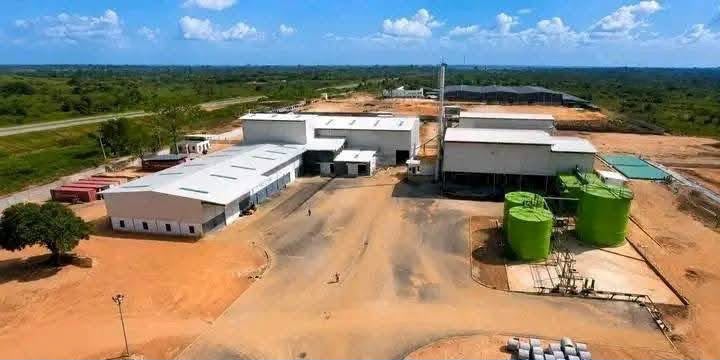
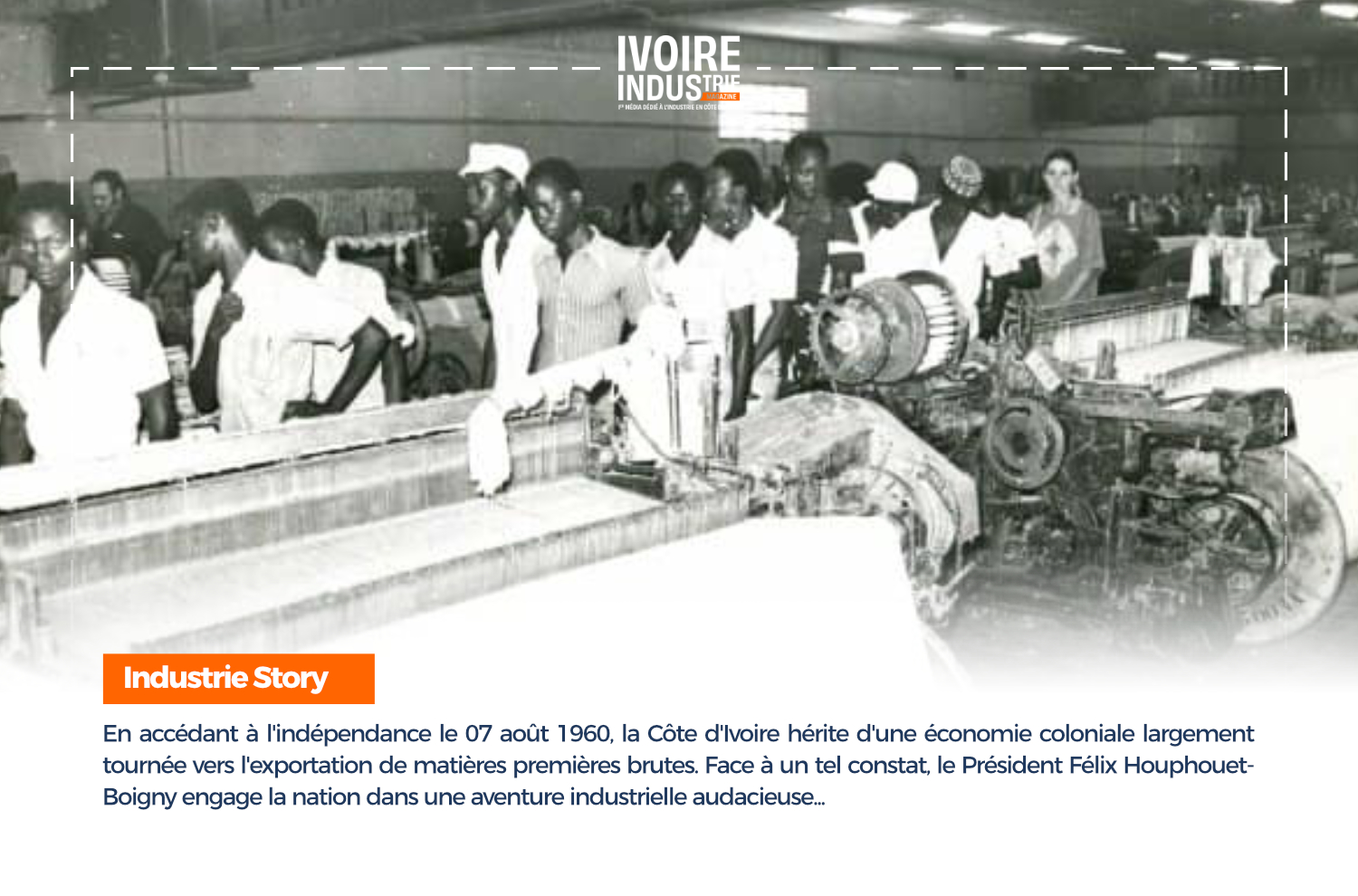
La stratégie industrielle ivoirienne des années 1960 ne vise pas une industrie lourde (sidérurgie, chimie, mécanique) que le pays n'a ni les capitaux, ni les matières premières minérales, ni les compétences techniques pour développer dans l'immédiat. Elle mise sur une industrie légère, tournée vers la transformation des produits agricoles locaux et la satisfaction d'une demande intérieure croissante. Concrètement, la décennie voit l'installation de minoteries, d'huileries et d’autres industries de ce style, qui transforment le cacao, l'huile de palme, les ananas et les tomates en produits semi-finis ou finis destinés à l'exportation ou à la consommation locale. Des filatures naissent pour transformer le coton du Nord en fils et tissus. Des scieries industrielles sont montées pour valoriser le bois, passant d'une simple exportation de grumes à une transformation sur place créatrice de valeur ajoutée. Cette stratégie de substitution aux importations et de valorisation locale répondait à un double impératif. Il s’agissait de créer de la valeur ajoutée sur le sol ivoirien et de générer des emplois formels dans un tissu économique encore largement informel. Le résultat est spectaculaire. Entre 1960 et 1973, la production industrielle enregistre un taux de croissance annuel moyen de 20% , faisant passer la part de l'industrie dans le PIB de 15 à 25%. Le chiffre d'affaires cumulé de la grande et petite industrie passe de 13,5 milliards de francs CFA à 164 milliards sur cette même période.
Les limites d'un modèle dépendant
Dès la fin des années 1960, certaines fragilités du modèle industriel ivoirien commencent à transparaître. La dépendance aux capitaux étrangers et à l'expertise expatriée rend l'économie nationale vulnérable aux aléas extérieurs. Les industries légères installées sont souvent tournées vers l'exportation de produits peu transformés, sans intégration dans des filières locales solides. La formation de cadres techniques nationaux, bien qu'amorcée, progresse lentement face aux besoins croissants d'une économie en expansion rapide. Par ailleurs, la stratégie d'attraction des investissements étrangers, si elle s'avère payante à court terme, ne favorise pas préalablement l'émergence d'un entrepreneuriat national autonome. Les entreprises ivoiriennes restent peu présentes dans les secteurs industriels modernes, largement dominés par des filiales de groupes français ou d'autres multinationales. Il faut le dire, malgré ces limites, la décennie 1960-1970 a posé les fondements d'une économie industrielle que la Côte d'Ivoire s'apprête à consolider dans les années 1970. Le taux de croissance moyen de 7,3% enregistré sur la période du plan décennal fait de la Côte d'Ivoire l'une des économies les plus dynamiques du continent africain. Ce résultat est d'autant plus remarquable qu'il dépasse les performances des pays d'Afrique noire et même celles de nombreux pays occidentaux à la même période.
L'horizon du « miracle ivoirien », qui deviendra dans les années 1970 une référence en Afrique et dans le monde, se profile clairement à la fin de cette première décennie fondatrice. La Côte d'Ivoire a, en 10 ans, réussi à transformer une économie coloniale en un embryon d'économie industrielle moderne. Ce n'est pas encore l'usine du monde, mais c'est déjà, et de loin, l'usine de l'Afrique de l'Ouest. Et pour un pays qui célébrait à peine sa dixième bougie d'indépendance, c'était déjà un exploit remarquable, la preuve vivante qu'avec une vision claire, des ressources bien mobilisées et une stratégie adaptée, un pays africain pouvait écrire lui-même son avenir économique.